Night Dives in the Red Sea
One of the most fascinating experiences of a liveaboard diving cruise is, without a doubt, the night dive. On board Blue Force 2, during our route through the Red Sea, we plan a night dive every evening of the trip (except the last day). For many divers, these dives are the most anticipated moment of the day.
When the Red Sea Turns Off the Lights
At night, the Red Sea changes its rhythm.
The bright, vibrant blue of the day gives way to a serene darkness, where marine life doesn’t sleep — it simply switches shifts. And in this changeover, some of the reef’s most fascinating characters take the stage.
On deck, as we prepare our torches and check our gear, we all know it: what awaits us below is a show reserved for those who dare to descend after the sun goes down.
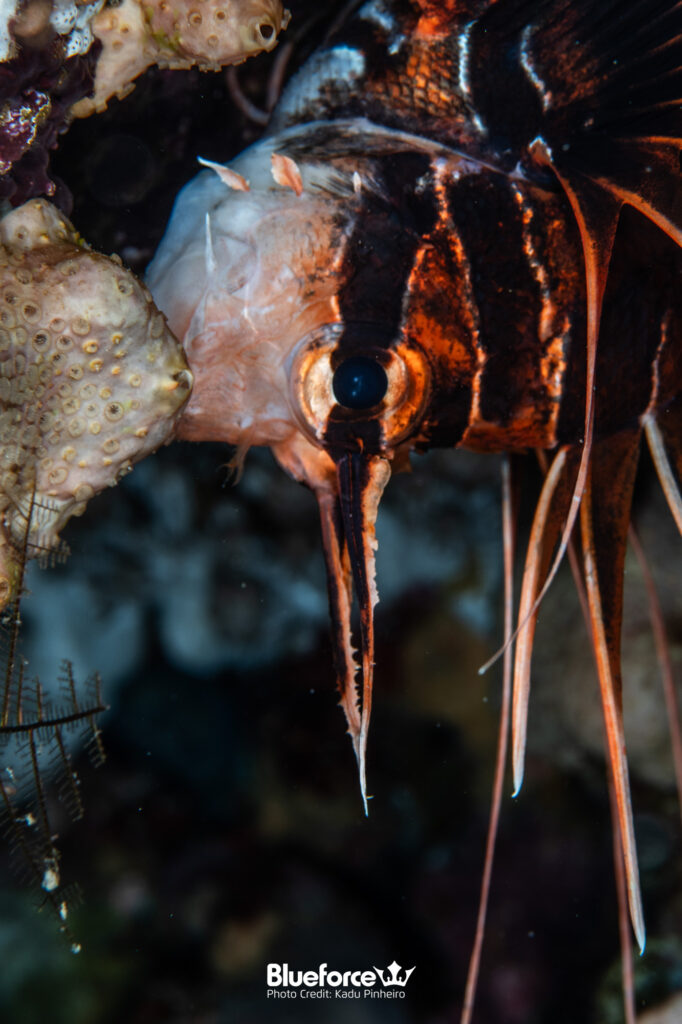
Lionfish – The Patient Hunters
By day, lionfish (Pterois volitans) look like part of the reef’s decoration, motionless with their long, ornate fins spread wide. But at night, they transform into active predators: using their fins like a living net to trap small fish and crustaceans.
Their hunting is silent and calculated — they advance slowly, spread their pectoral fins wide, and in a sudden snap, capture their prey. In the Red Sea, it is quite common to see them hunting in groups at night, a behavior rarely observed in daylight.
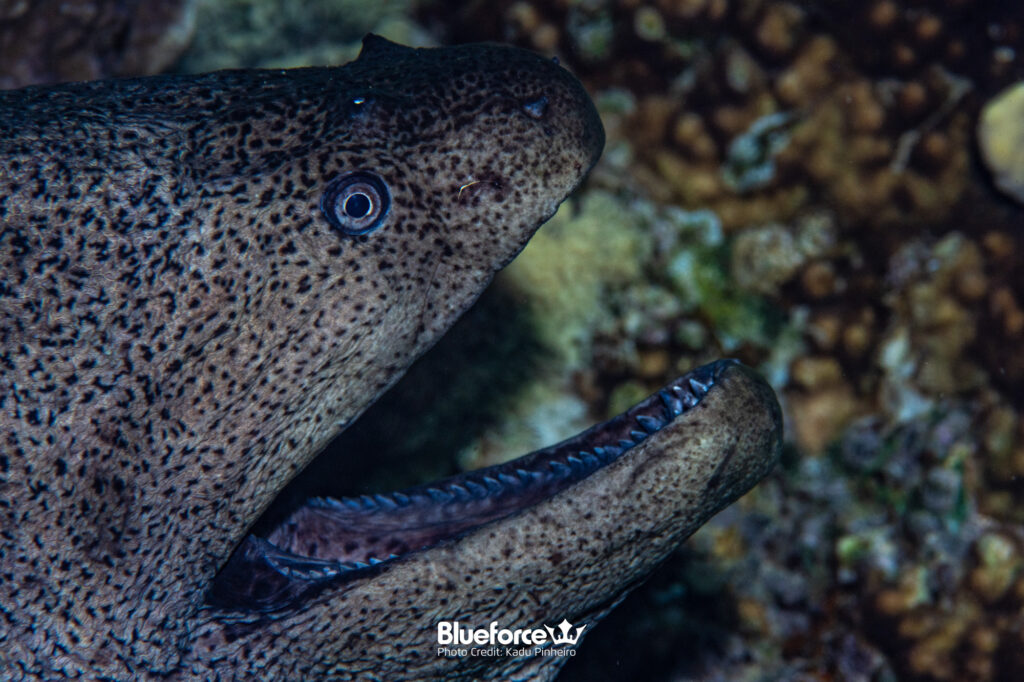
Giant Morays – The Matriarchs of the Ree
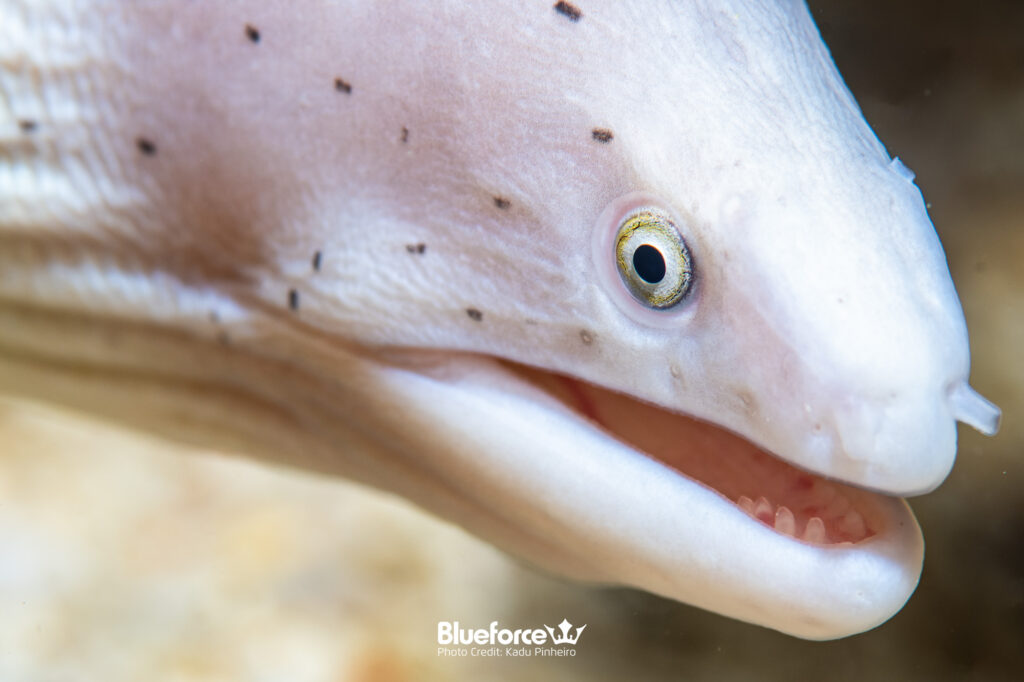
Giant moray eels (Gymnothorax javanicus) are discreet during the day, usually showing only their heads from a crevice, opening and closing their mouths in a slow, rhythmic motion — not aggression, just breathing.
At night, everything changes: they leave their dens and prowl the reef with powerful, undulating movements in search of prey. They often take advantage of divers’ torchlight to spot their targets — a reminder that underwater, we sometimes assist the hunt without even realizing it.
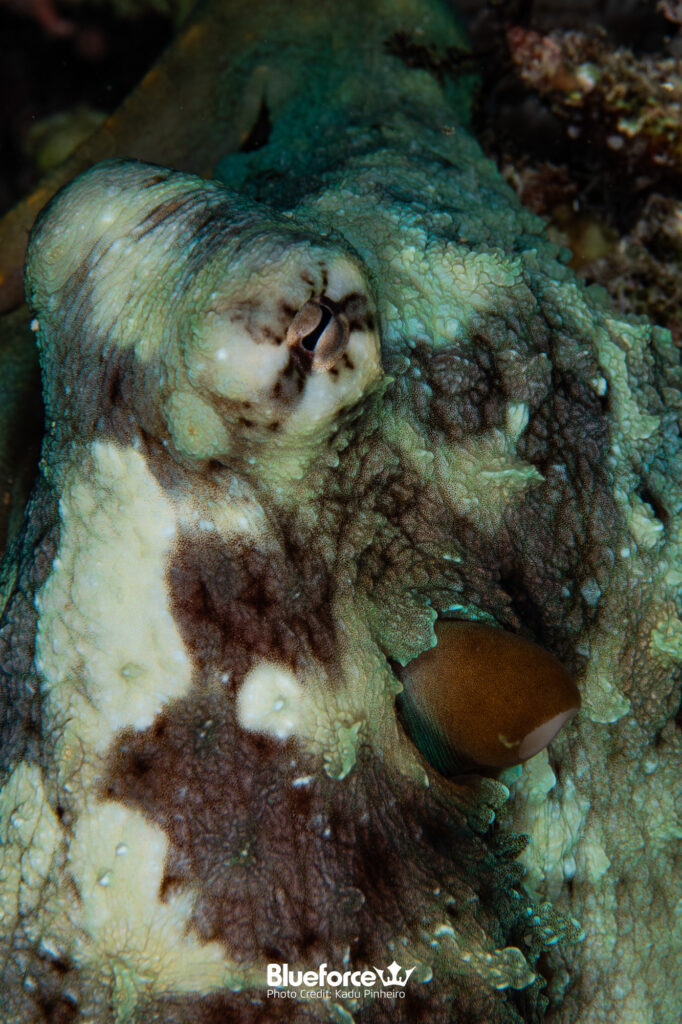
Octopus – Masters of Disguise
Octopuses (Octopus cyanea and other local species) are versatile and intelligent hunters. At night, they explore every nook of the reef, instantly changing color and texture to camouflage or ambush prey.
They’ve been observed opening shells, using rocks as tools, and even manipulating objects from the seabed. On night dives, it’s not unusual to find them mid-dinner, wrapped around a crab or a small fish.
Squid – Open Water Predators
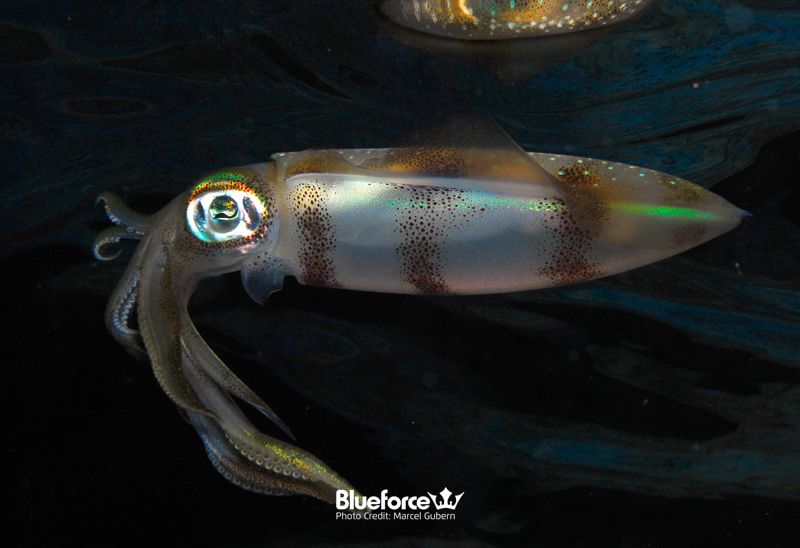
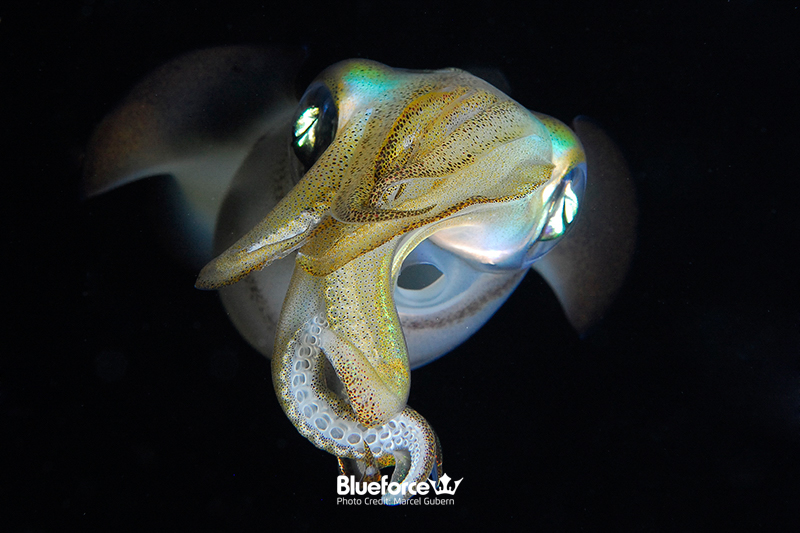
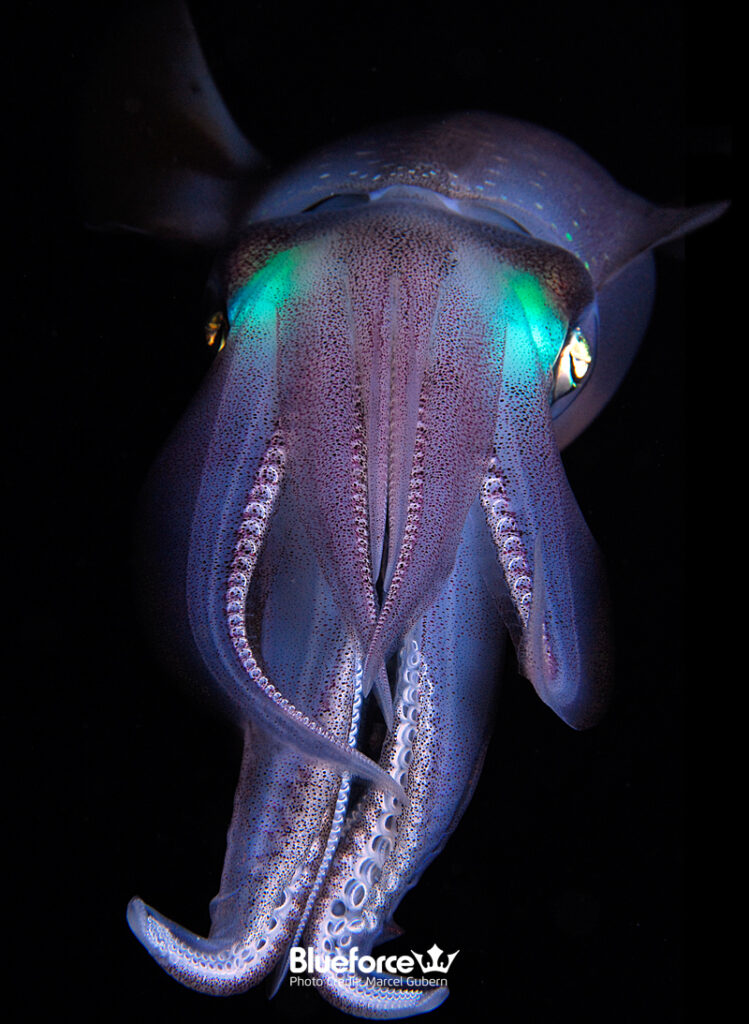
Squid (Sepioteuthis lessoniana and other species) prefer the open water to the reef. At night, they patrol these zones with precision, and thanks to their chromatophores, they can change color in an instant — for camouflage, communication, or intimidation.
On calm Red Sea nights, they often approach divers’ torches out of curiosity, only to vanish again in a lightning-fast burst.
Sleeping Turtles – Resting in the Reef
Green turtles (Chelonia mydas) and hawksbill turtles (Eretmochelys imbricata) retreat into reef crevices and caves to rest at night.
We often find these peaceful giants in deep slumber, motionless, with only the slow and steady rhythm of their breathing breaking the stillness. Respecting their rest is essential — sleep is a vital part of their survival.
Nudibranchs and the Spanish Dancer – Jewels and Stars of the Night
Nudibranchs — shell-less mollusks — amaze with their incredible diversity of shapes and colors, like tiny living works of art. Slow but perfectly adapted, they feed on sponges, anemones, and sometimes even other nudibranchs.
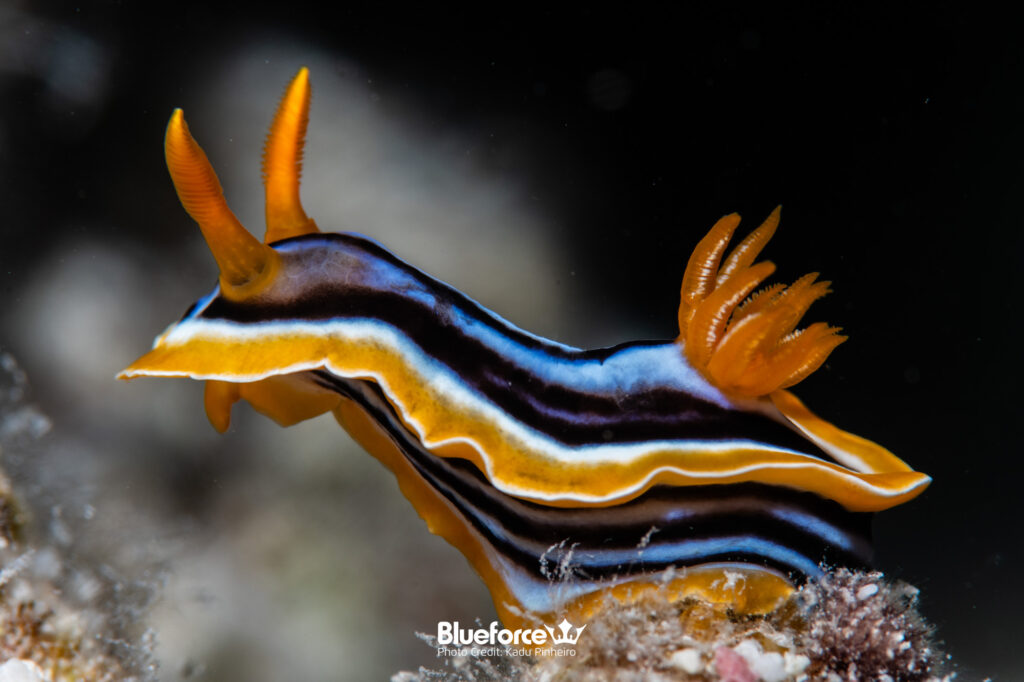
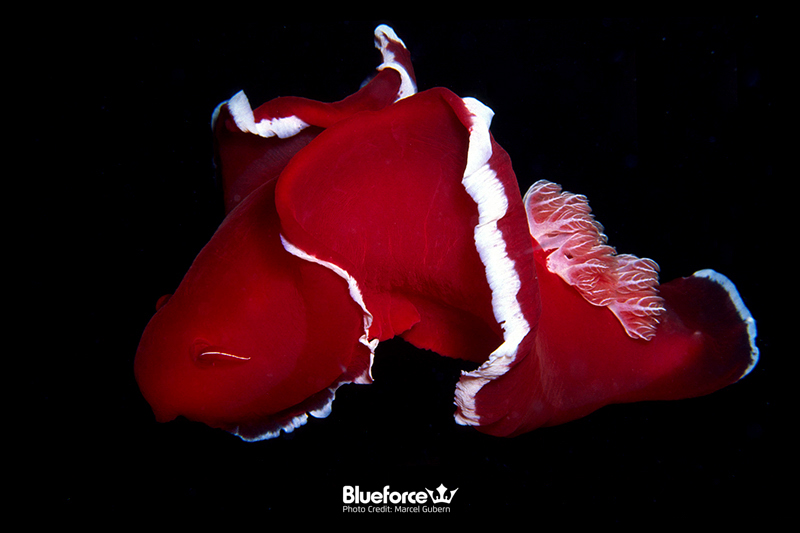
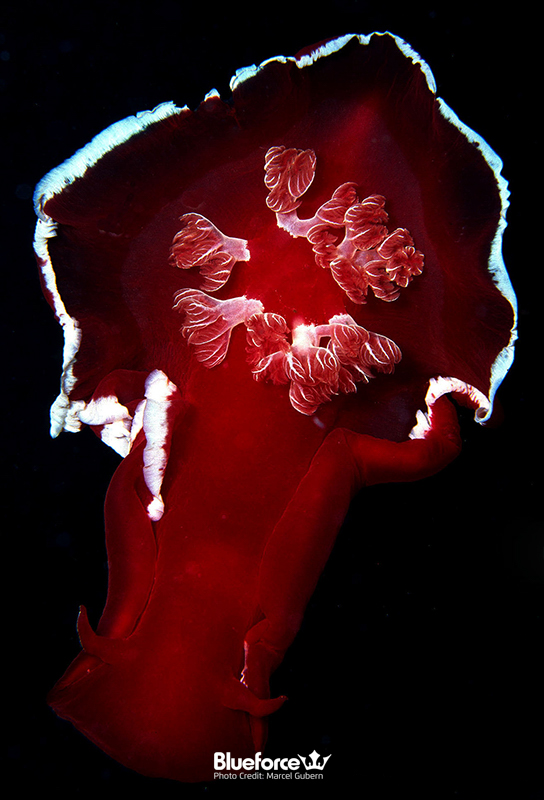
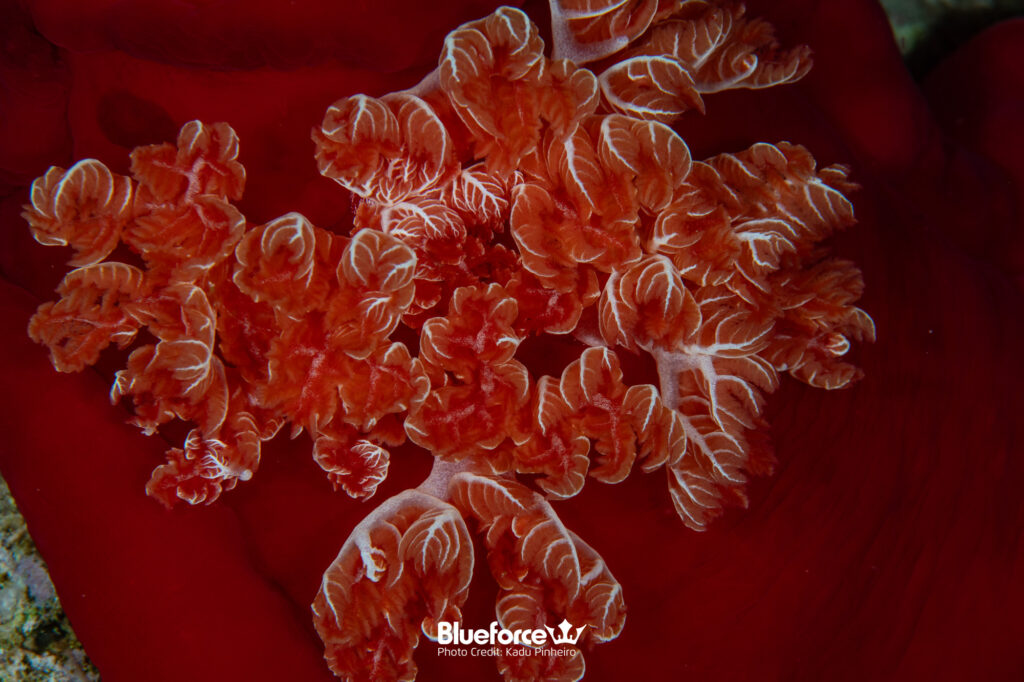
Among them, one truly steals the spotlight: the Spanish dancer (Hexabranchus sanguineus). This giant nudibranch can exceed 30 cm in length, and its name comes from its graceful, undulating swimming motion, reminiscent of a flamenco skirt in motion. During the day it hides beneath rocks and corals, but at night it emerges, its vivid red body edged with yellow, performing a hypnotic dance that stops every diver in their tracks.
The Thistlegorm – History and Life in the Dark
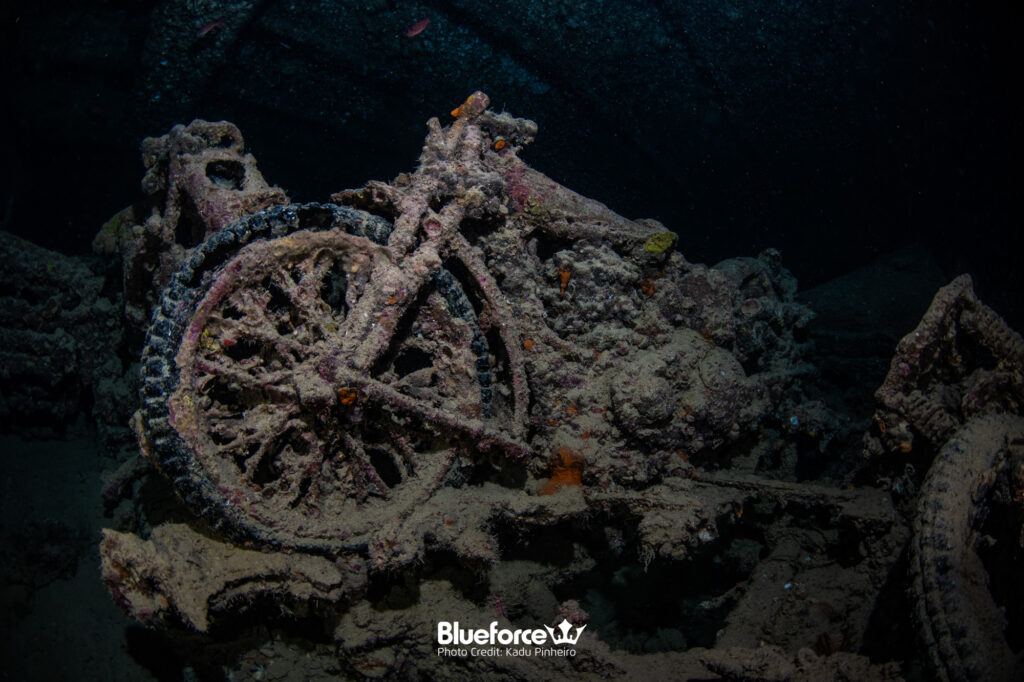
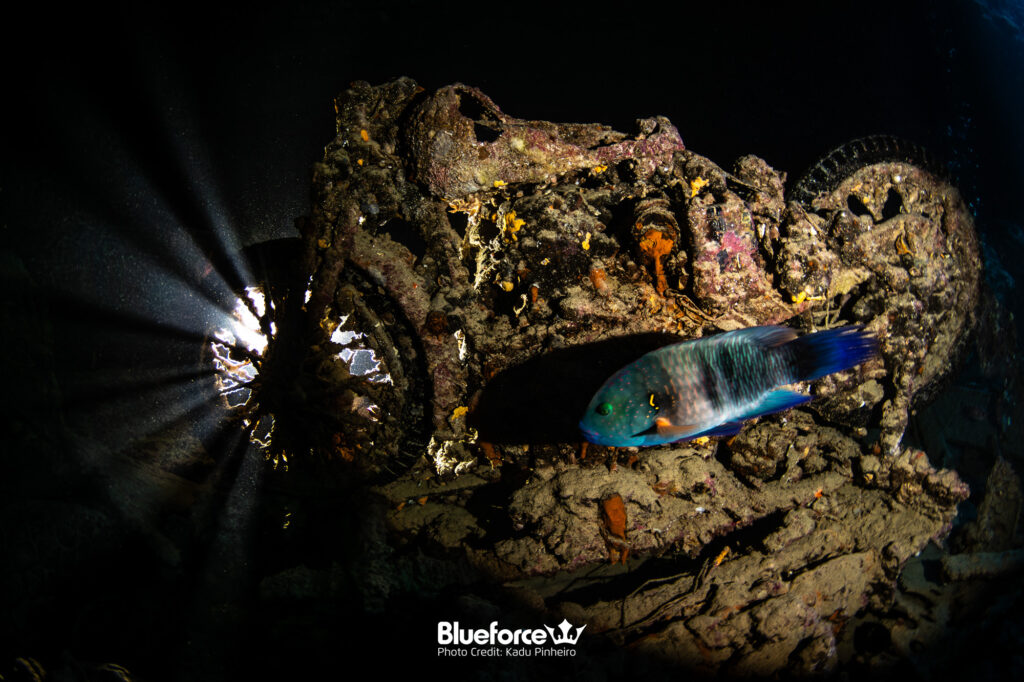
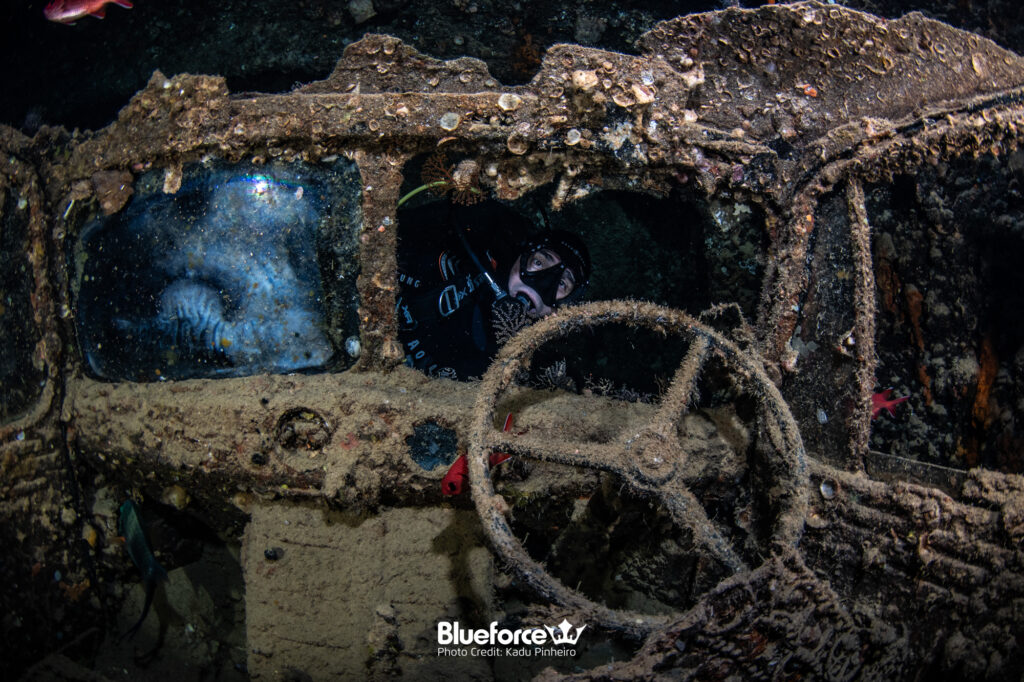
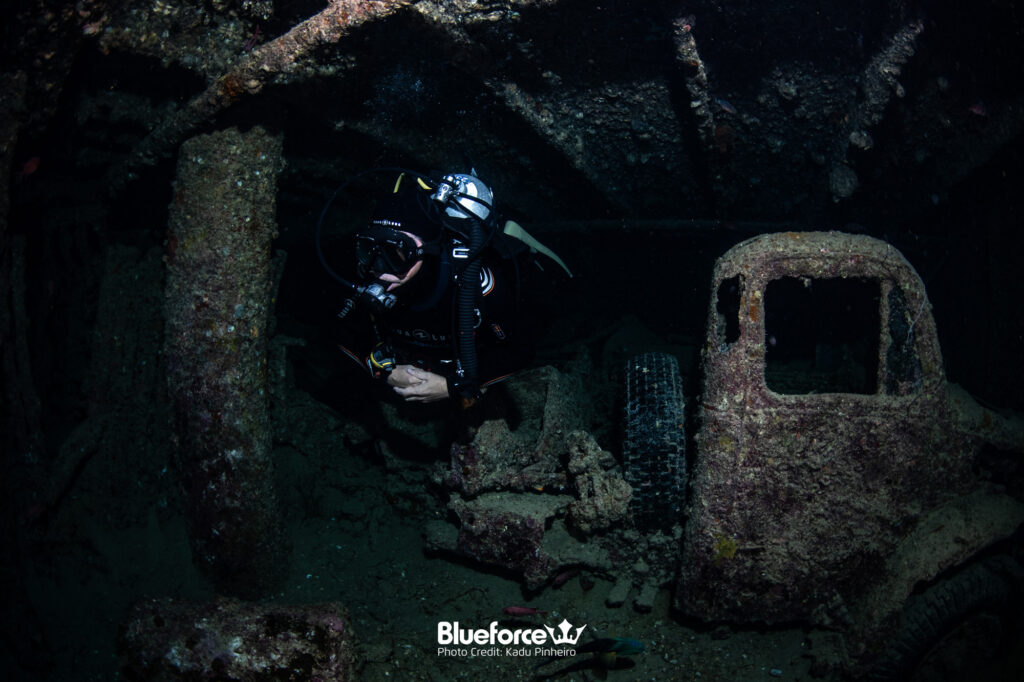
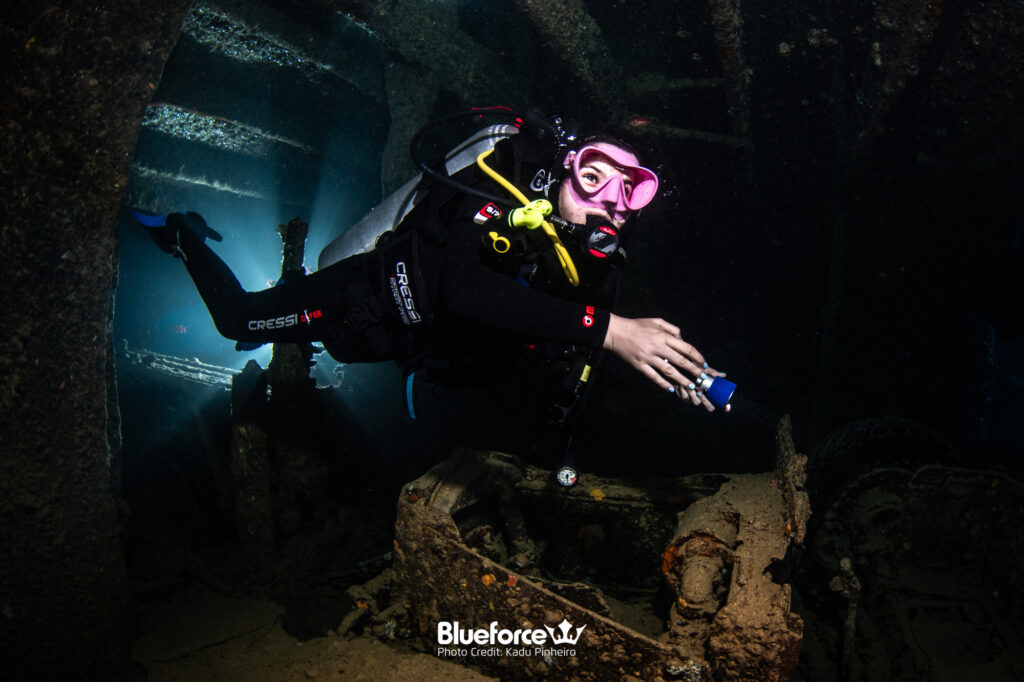
On our Northern Red Sea route aboard Blue Force 2, we are fortunate enough — weather permitting — to dive at night on the legendary wreck of the SS Thistlegorm, considered one of the best wrecks in the world.
The difference between diving here by day and by night is astounding.
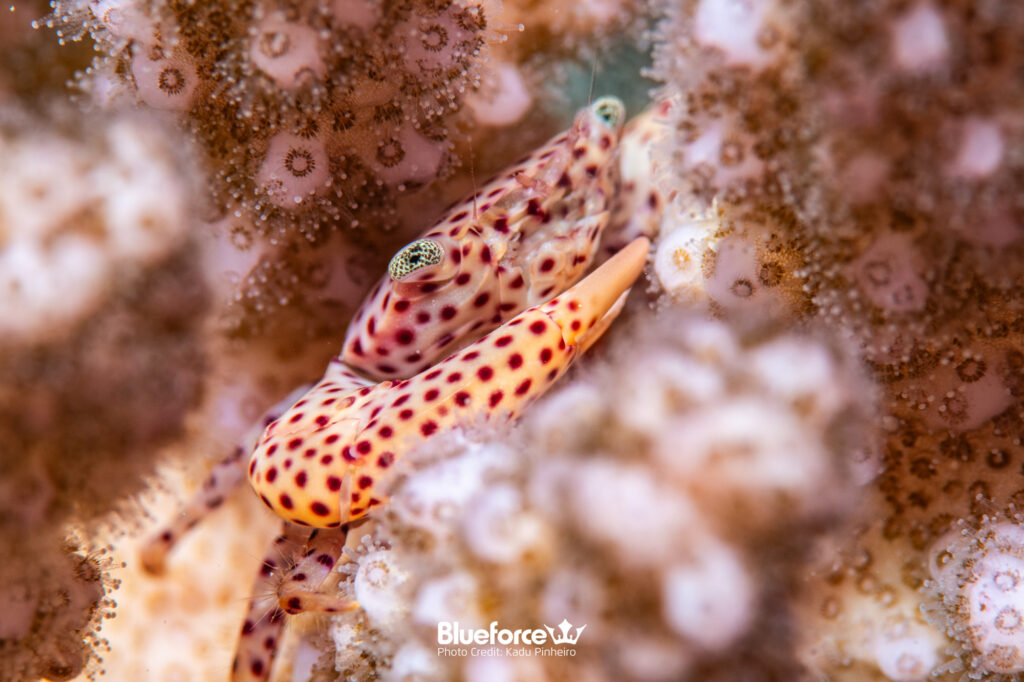
By day we explore its frozen history from 1941: trucks, motorcycles, weapons, and military supplies. By night, torchlight slices through the shadows to reveal its nocturnal residents: morays patrolling steel passageways, shrimps crawling over rusted surfaces, nudibranchs colonizing forgotten corners, schools of silvery fish turning the corridors into tunnels of stars, lionfish hunting between the trucks. The atmosphere is so intense that it feels like more than just a dive — it’s living history.
Why Night Diving Is So Special
Night diving is not just about seeing different species — it’s about changing the way we connect with the sea.
With your field of vision reduced to the beam of your torch, your focus shifts to details, subtle behaviors, and intimate moments that go unnoticed during the day. It becomes a fully immersive sensory experience: the constant sound of your breathing, the stark contrast between light and darkness, the slower, more deliberate movements so you don’t miss a thing.
On Blue Force 2, every night dive is designed to combine safety, exploration, and wonder. Because when the Red Sea turns off the lights, it invites us to a private show — and witnessing it is a privilege that will stay with you forever.


You May Also Like
The Tiran Reefs
Snorkeling with Dolphins in the Red Sea: Pure Magic Aboard the BLUE FORCE 2