What Wetsuit Should I Bring to the Maldives or the Red Sea?
Tips for Choosing the Ideal Wetsuit Based on Season and Destination
One of the key preparations when planning your diving trip with Blue Force Fleet is deciding what wetsuit to bring. Although both the Maldives and the Red Sea are tropical destinations, water temperatures vary depending on the time of year and the specific region—so there’s no one-size-fits-all answer.
A wetsuit doesn’t just protect you from the cold: it also provides a physical barrier against chafing from the BCD, accidental contact with reefs or wrecks, minor stings, or scratches. It’s an essential piece of gear for comfort and safety.
Let us help you choose the right suit for your next diving adventure in the Maldives or the Red Sea with Blue Force.
How Does a Wetsuit Work?
Neoprene—the most common material in wetsuits—is a closed-cell foam filled with tiny gas bubbles. This structure prevents water from passing through and creates a thin layer of water between your body and the suit, which warms with your body heat and helps insulate you during the dive.
For the suit to work effectively, it must fit snugly against your body without being overly tight or leaving gaps that allow water to circulate.
How to Choose the Right Wetsuit
1. Proper Fit
A wetsuit should feel like a second skin. If it’s too loose, it loses thermal efficiency; if it’s too tight, it can restrict breathing and mobility. Keep in mind that neoprene feels tighter when dry but loosens slightly in the water. Over time, it also molds better to your body.
2. Neoprene Thickness
Thickness determines thermal protection. Thicker suits offer more insulation—though also more buoyancy, meaning you’ll need additional weight.
- 3 mm: for warm waters (26–30 °C / 79–86 °F)
- 5 mm: for mild waters (22–27 °C / 72–81 °F)
- 7 mm: for cooler waters (18–22 °C / 64–72 °F)
Some wetsuits use varied thicknesses (thicker on the torso, thinner on limbs) to balance warmth and flexibility.
3. Suit Type
The most common type is the full one-piece wetsuit. Other options include shorties (short arms/legs), semi-dry, or drysuits (used in cold water). For tropical recreational diving, a 3 mm or 5 mm full suit is typically ideal.
4. Features That Matter
Pay attention to wrist, ankle, and neck seals, zipper type, reinforced areas (knees, shoulders), and overall design. Some brands also offer gender-specific or anatomically tailored fits for added comfort.
The Red Sea: Tropical, But with Seasonal Variations
The Red Sea experiences significant temperature variation across the year and between its northern and southern regions:
January to March
– North (Sharm el Sheikh): 21–22 °C / 70–72 °F
– Central (Hurghada): 22–24 °C / 72–75 °F
April to June: rising to 27–29 °C / 81–84 °F
July to September
– North: 28–29 °C / 82–84 °F
– South: up to 32 °C / 90 °F
October to December: slight cooling, generally between 25–27 °C / 77–81 °F
Note: At greater depths (15–20 meters / 50–65 feet), the temperature may drop slightly—usually no more than 1 °C / 2 °F—especially in summer.
Recommended by season:
– November to April: 5 mm or 7 mm wetsuit, or semi-dry suit if you’re sensitive to cold
– May and June: 5 mm or 3 mm wetsuit depending on personal tolerance
– July to October: 3 mm wetsuit suits most divers
Need to rent gear?
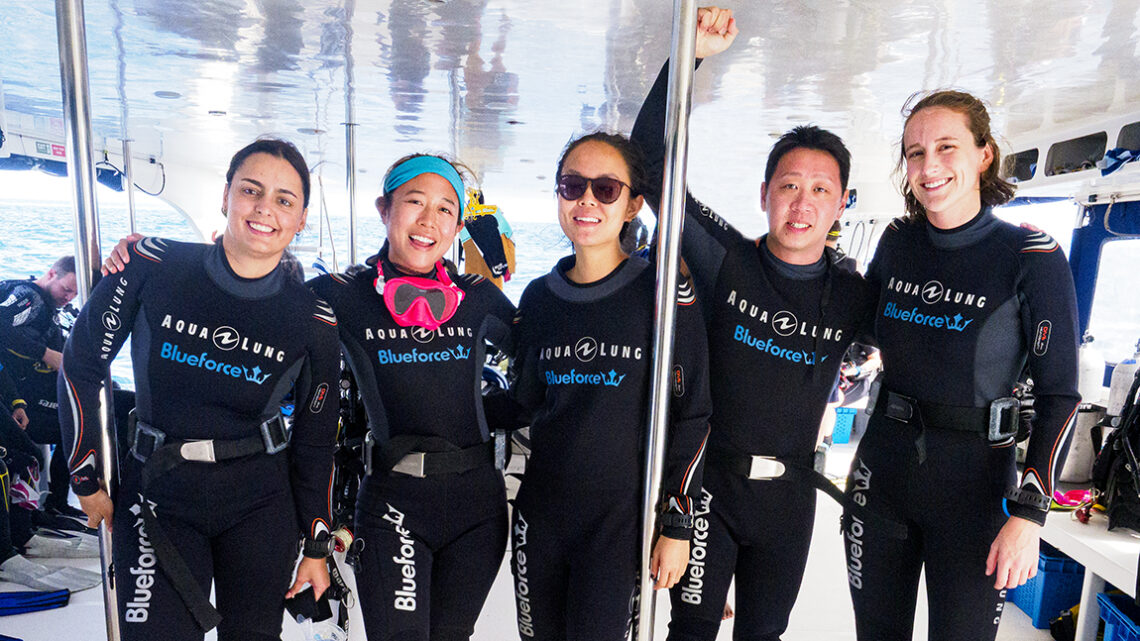
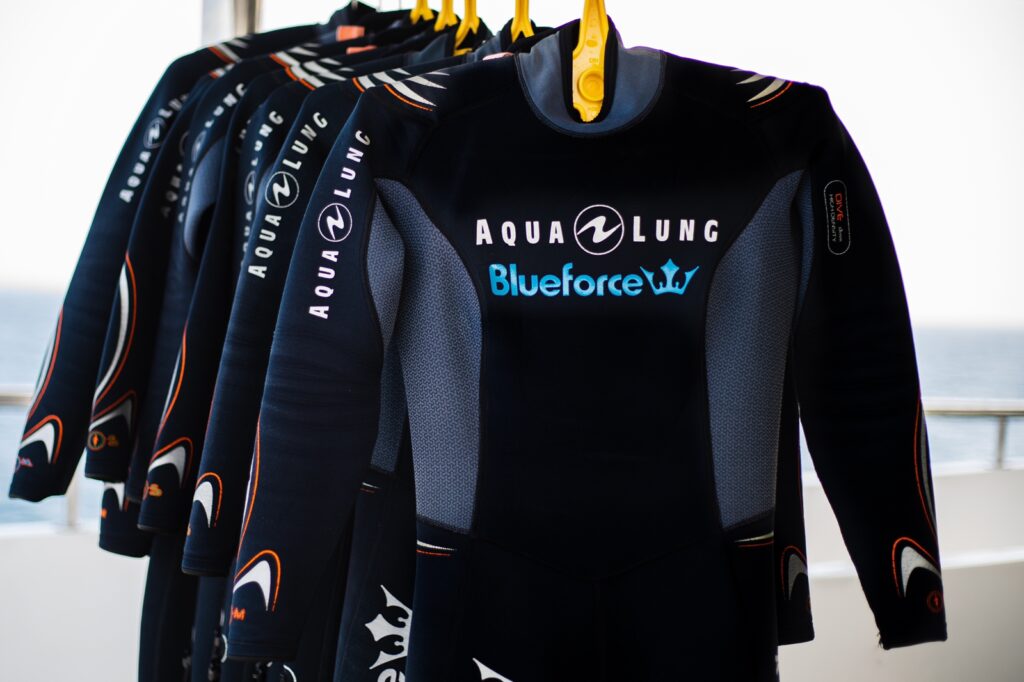
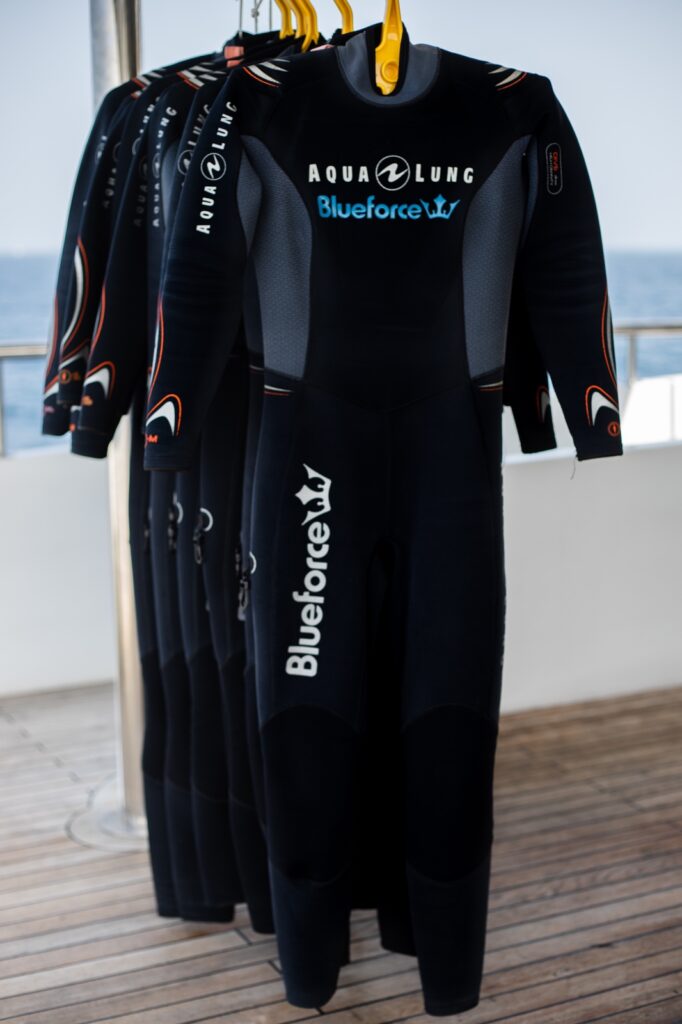
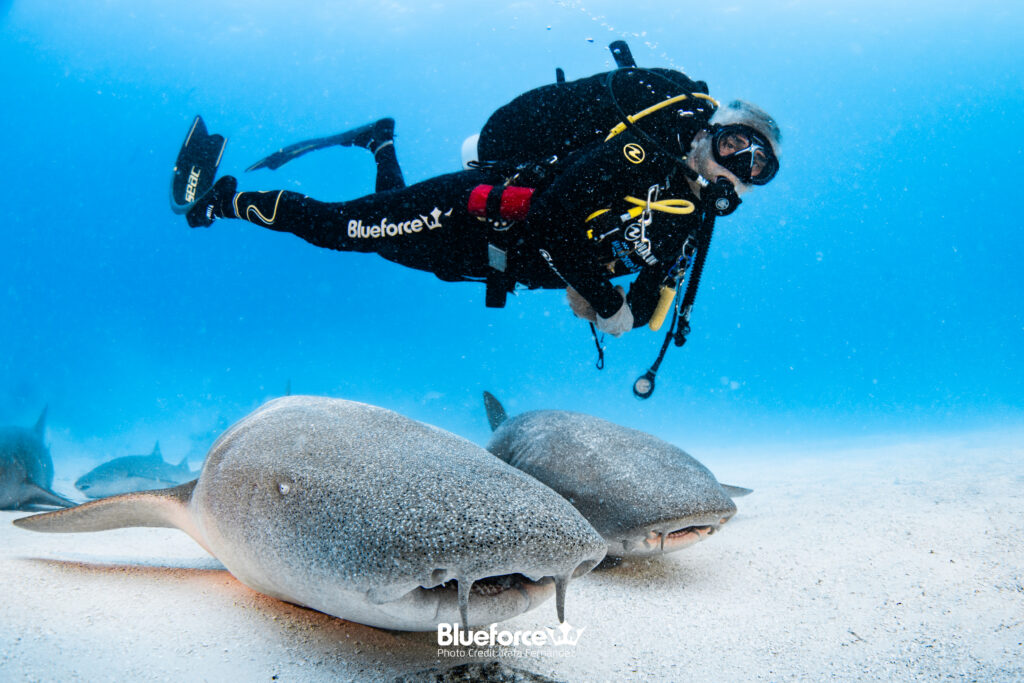
Onboard the Red Sea Blue Force 2, we offer top-quality AQUA LUNG 5 mm full wetsuits for rent—well maintained and ready to use.
Maldives: Year-Round Warm Diving
In the Maldives, the water temperature stays warm and stable all year round:
– Annual average: 28–30 °C / 82–86 °F
– Channels & thermoclines: may be slightly cooler, but rarely more than 2 °C / 3 °F variation
Recommendation:
A 3 mm full wetsuit is ideal. Some experienced divers or those less sensitive to cold may prefer a lycra suit or shorty—but after several dives per day, a full suit offers more consistent protection.
Extra comfort tip:
A thin hood or additional shorty can provide added warmth during long or repeated dives.
Need to rent gear?
Onboard the Maldives Blue Force One and Blue Force 3, we provide AQUA LUNG 3 mm full wetsuits for rent in excellent condition.
Temperature Perception Is Personal
Thermometers may be precise, but how we experience temperature varies widely. Factors like metabolism, rest, stress, or activity level all play a role. On a liveaboard with 3–4 dives per day, cumulative heat loss becomes noticeable.
Final tip:
It’s better to slightly overprepare than to be caught cold. A thicker wetsuit or thermal layer can make a big difference.
Bringing a thermal rash guard or heated vest is also a smart way to complement your wetsuit during the cruise.
Still Unsure? We’re Here to Help!
Not sure what to pack? Get in touch with our team. With over 25 years of experience organizing diving cruises in the Maldives and the Red Sea, we’ll be happy to advise you and help make your dive trip comfortable and unforgettable.


You May Also Like