Why Is the Red Sea the Best Place in the World to Improve Your Buoyancy?
Every diver has heard the phrase: “Good buoyancy is the foundation of everything.”
But the truth is, few people fully understand what that means until they dive in the Red Sea.
Interestingly, most buoyancy problems don’t happen because the diver doesn’t know the theory. Almost everyone knows they should breathe in a controlled way, avoid over-inflating the BCD, and maintain a balanced position in the water.
The challenge is usually something else: lack of perception.
In many destinations, reduced visibility limits the visual references available. The bottom disappears a few meters down, the sense of distance becomes less precise, and small depth deviations go unnoticed.
The brain simply receives less information to work with.
In the Red Sea, the opposite happens.
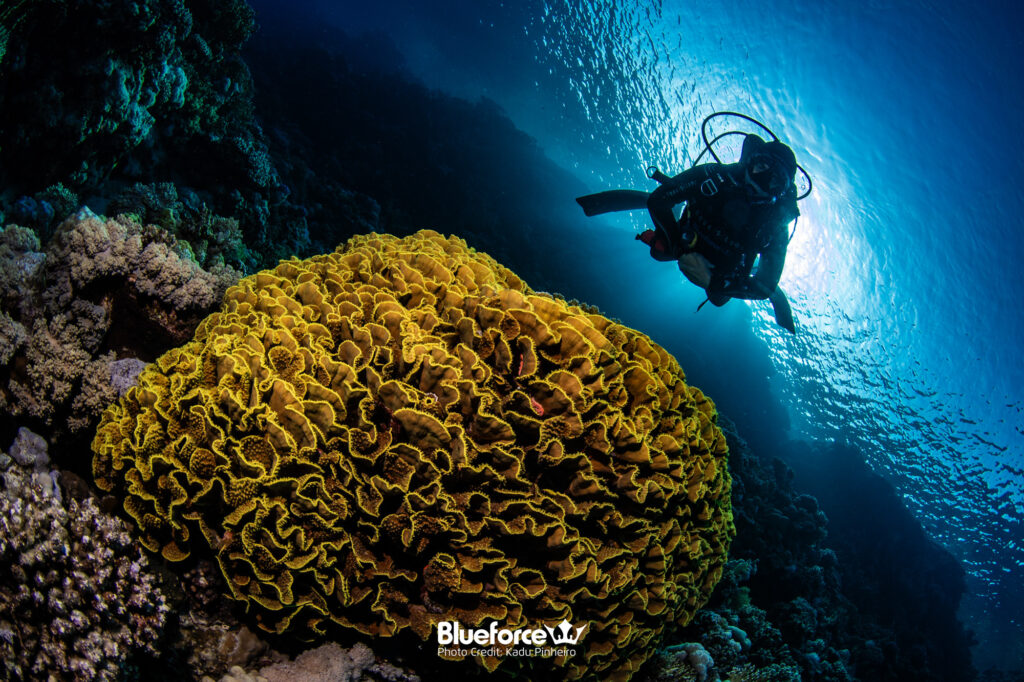
The first sensation is usually visual. You enter the water and can see the reef stretching into the distance, walls dropping into the blue, and often the bottom far beyond what you’re used to seeing at other destinations.
But, without realizing it, something more important is happening.
You start receiving constant information from the environment.
Your distance from the reef becomes obvious. Your body’s position in the water column becomes easier to perceive. Small variations in depth become visible even before you check your dive computer.
And that’s exactly where the learning happens.
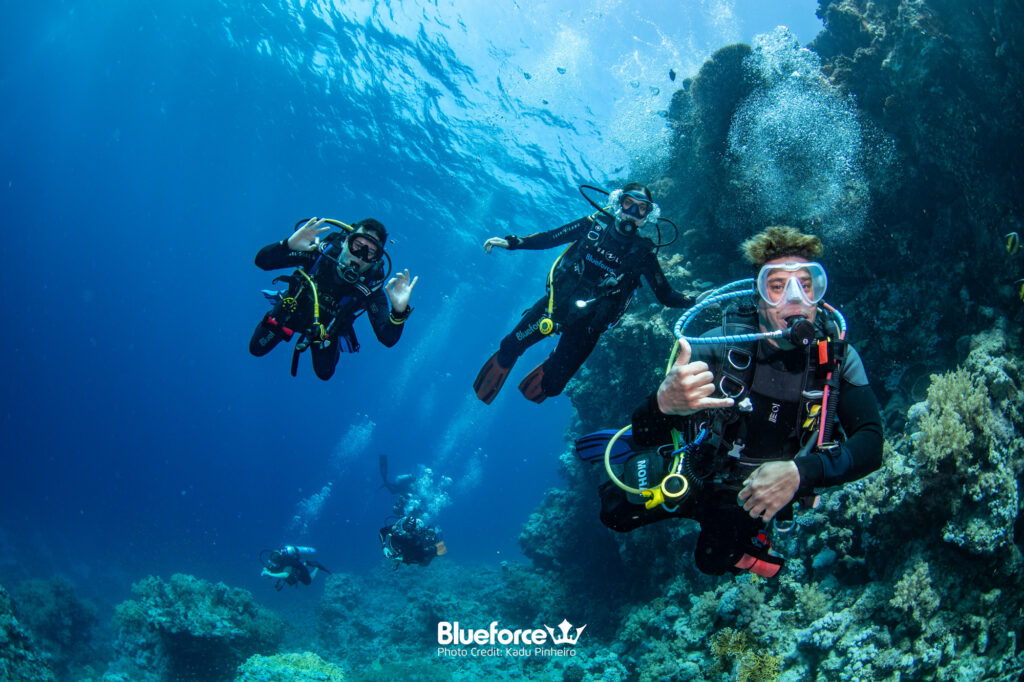
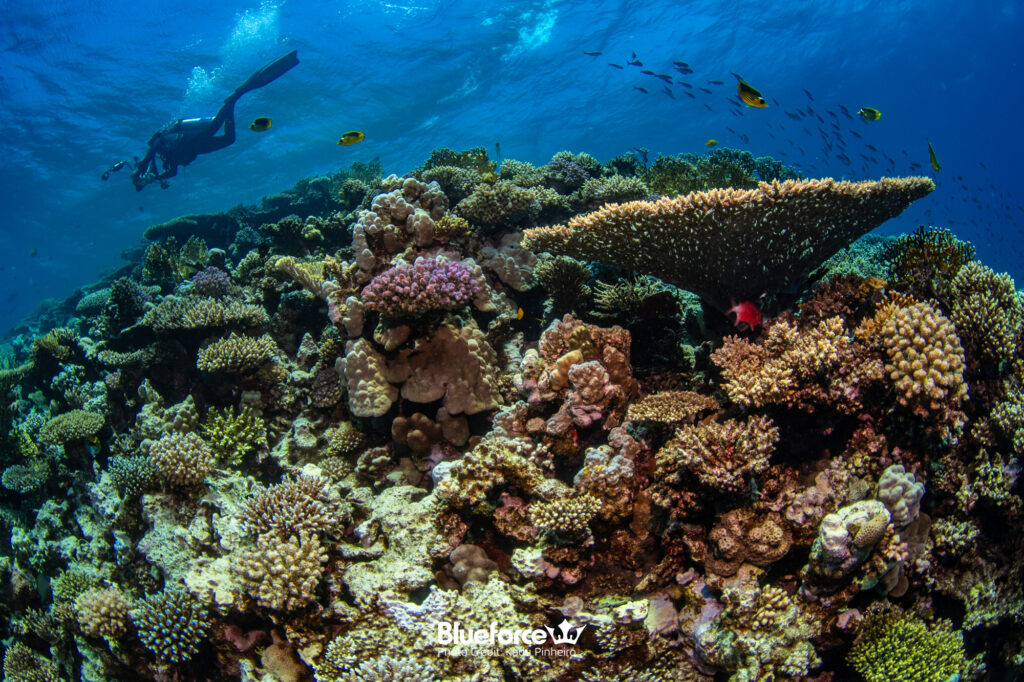
With every dive, the environment provides immediate feedback. Small adjustments in breathing produce clear results. A subtle change in body position improves balance. Trim becomes more natural. BCD control becomes more refined.
Without realizing it, you start diving more smoothly, with less effort, fewer corrections, and much more awareness.
Perhaps that’s why so many instructors around the world love teaching in the Red Sea. Conditions don’t do the work for the diver, but they make it much easier to understand the effect of each adjustment.
And there’s another aspect that makes the experience even more interesting.
The classic northern route doesn’t just offer excellent visibility. It offers variety.
Over the course of a single week, you can dive shallow reefs full of life, walls covered in coral, pinnacles exposed to currents, and some of the most famous wrecks on the planet.
Each environment demands something different.
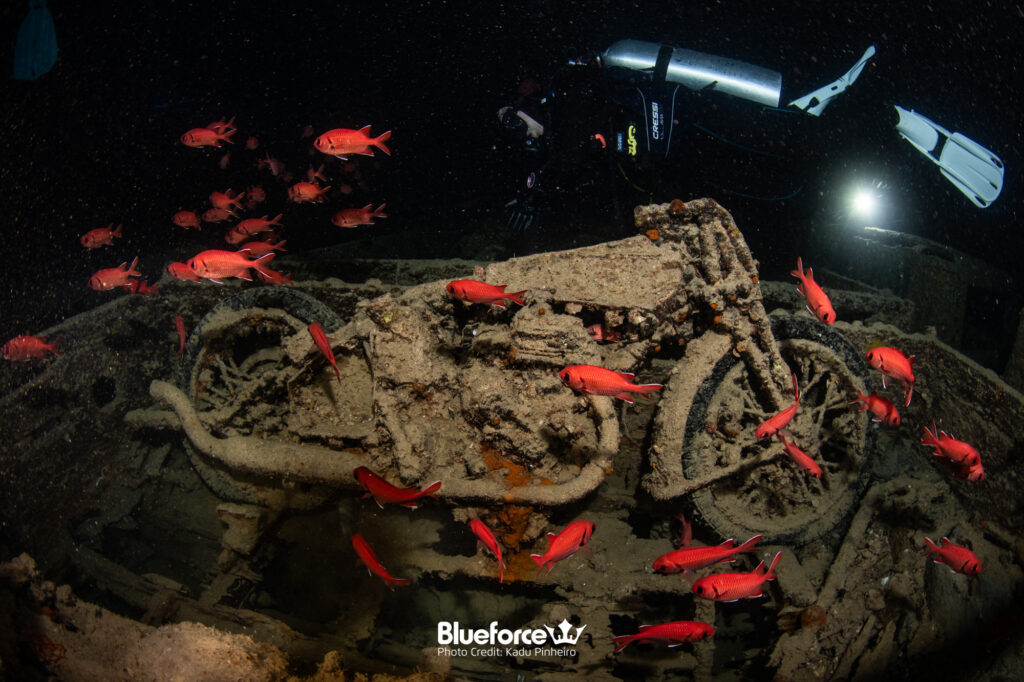
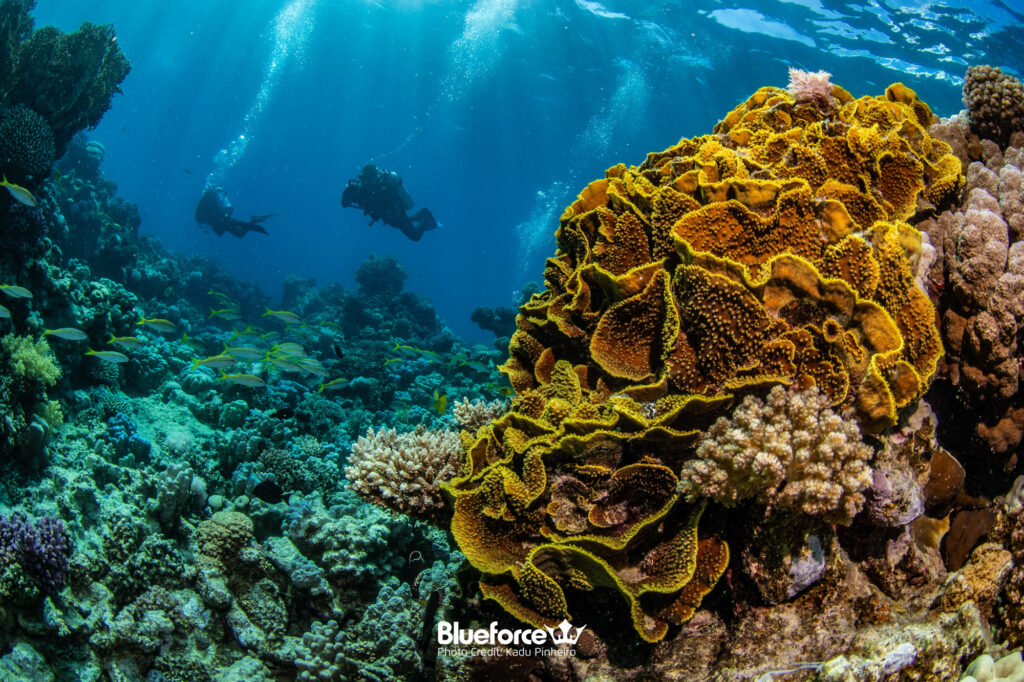
On the reefs, you learn to maintain proper distance from the coral while controlling your position in the water. On the walls, you develop spatial awareness. On the wrecks, you quickly notice how stability and precision make all the difference.
Few places offer so many opportunities for growth in a single itinerary.
That’s exactly why so many divers come back from the Red Sea feeling like they didn’t just take a trip, but made a leap in their own evolution as divers.
The combination of exceptional visibility, variety of environments, and liveaboard rhythm creates a unique setting to learn, practice, and grow.
➡️ Check out the upcoming expeditions aboard the Blue Force 2 and discover why the classic northern route remains one of the most complete diving experiences in the world.
That’s exactly why many divers board the classic northern route thinking about the destination’s big names — the legendary reefs, the impressive visibility, and the historic wrecks — and end up going home with something far more valuable.
They go home as better divers.
More efficient.
More comfortable in the water.
More aware of their own body and surroundings.
Perhaps that’s one of the least talked-about benefits of a week aboard the Blue Force 2.
Between one dive and the next, as the boat sails to the next reef or the next wreck, the growth happens almost without you noticing. Not through a classroom, but through the repetition of good conditions, good dives, and constant observation.
And when the trip ends, many divers discover something curious.
The photos and videos are great memories.
But the best thing they brought home wasn’t an image.
It was a skill.
A skill that will be present in absolutely every dive they make from then on.


You May Also Like
The Red Sea Isn’t Red
Hanifaru Bay (Baa Atoll, Maldives)