The Red Sea Isn’t Red
The story behind one of the ocean’s most curious names
The first time you enter the water in the Red Sea — aboard the Blue Force 2, sailing the classic northern route — a few things grab your attention right away: the visibility, the deep blue, the reefs, the sheer amount of life. But there’s a question that probably doesn’t cross your mind: why is this sea called the Red Sea?
Because underwater, the answer seems obvious: it isn’t red. Most of the time, what you see is exactly the opposite — an enormous stretch of blue, often so clear that the bottom looks much closer than it really is.
So where did the name come from? The answer is far more interesting than it seems.

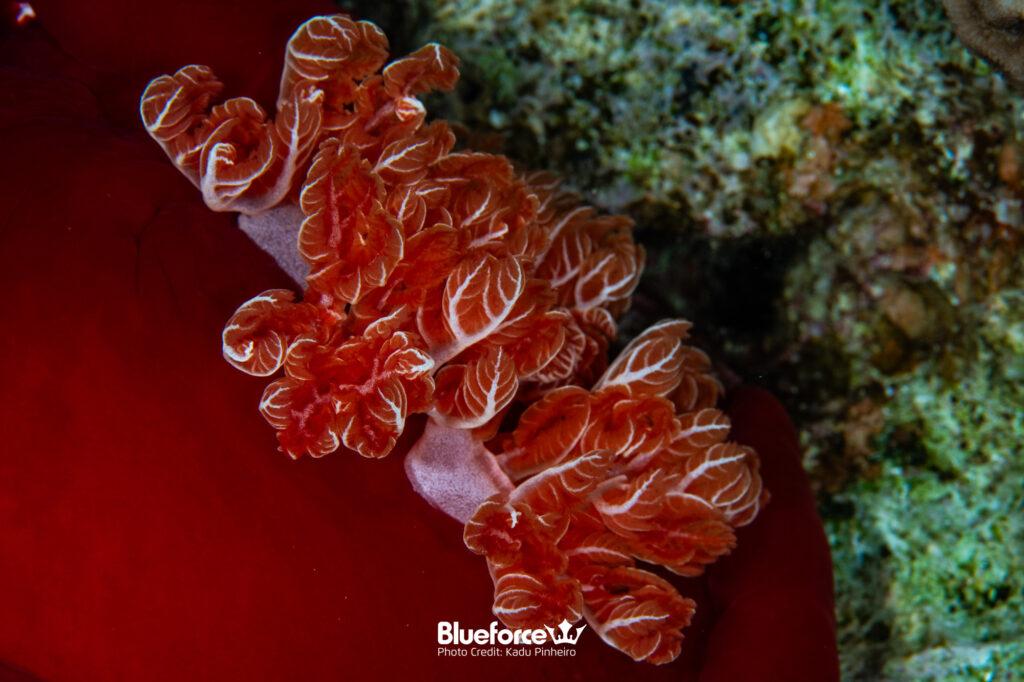
A name thousands of years old
The name we use today wasn’t born in English. The ancient Greeks already called this region Erythra Thalassa — literally “Red Sea” — and the Romans, later on, used the Latin form Mare Rubrum. But the origin of the name is far more complex than a simple reference to the color of the water.
There’s no single, definitively proven explanation for the “red.” Over the centuries, different theories have been proposed.
One links the name to seasonal blooms of a marine microorganism, Trichodesmium erythraeum, which can give the water’s surface a reddish tint under certain conditions. Another connects it to the reddish mountains and landscapes found along parts of the coastline.
There’s also a linguistic and geographic reading: in some ancient traditions, colors were used to indicate directions, and “red” may have represented the south — the same way “black” was linked to the north in other historical seas. This theory is still debated today.
And there’s an explanation tied to Edom, a word associated with the meaning “red” and with the people who inhabited parts of the region south of Israel. Classical sources also record a tradition that the name may trace back to a king called Erythras.
In other words: maybe there was never a single “red” behind the name. It may be the result of a combination of geography, language, history, and human perception — and that fits the Red Sea perfectly.
Before it was a diving destination
Today we think of the Red Sea through cylinders, masks, dive boats, and reefs. But long before any of that, it was already a route.
Ancient civilizations sailed its waters, using its ports and coastlines as part of trade networks connecting Egypt, the Arabian Peninsula, the Horn of Africa, and, later, regions much farther away. The Greek name for this region, in fact, was once used far more broadly — sometimes designating not just today’s Red Sea, but a much larger stretch of the Indian Ocean and its gulfs.
During the Roman period, the Red Sea became a key commercial link to the East. Shipping routes connected Egypt to Indian Ocean trade, creating a maritime corridor that crossed cultures, empires, and centuries.
When the Blue Force 2 sails the Red Sea today, it’s following, in a way, a route that navigators have traveled for thousands of years. Except now you’re looking for something else on board. Not spices, not gold, not silk — you’re looking for what lies beneath the surface.
A geographic reason behind it all
The Red Sea is an extraordinary geological formation. It sits along a tectonic plate boundary — part of a rift system that continues to reshape the region to this day. In other words: the Red Sea is still, geologically speaking, a work in progress.
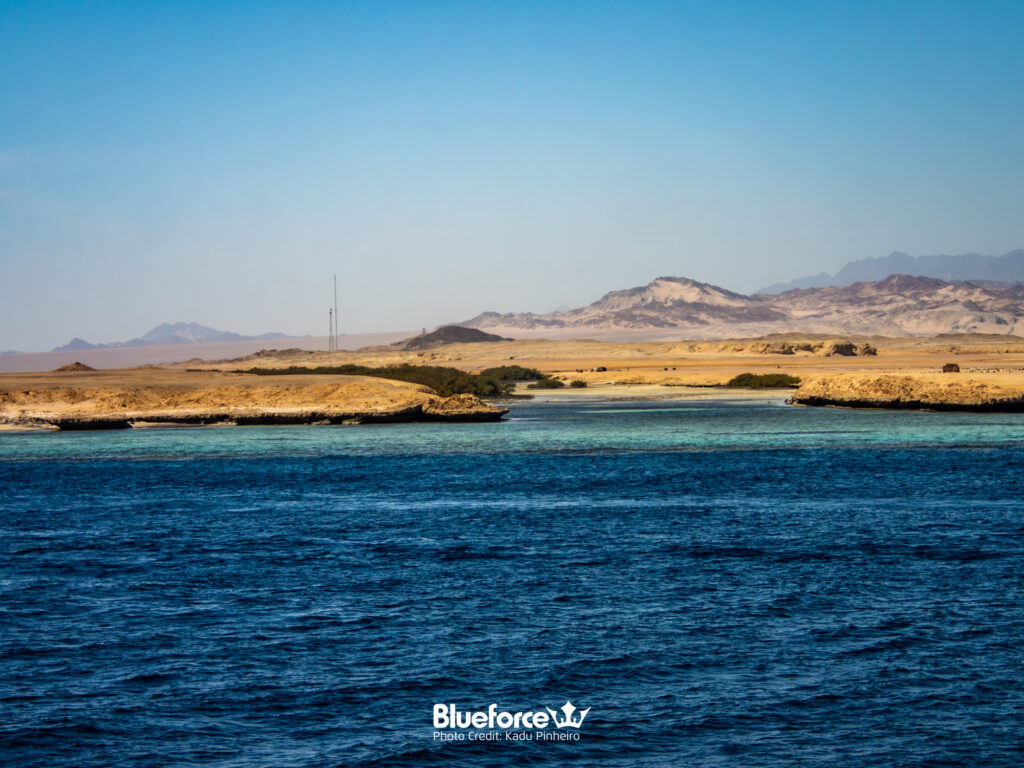
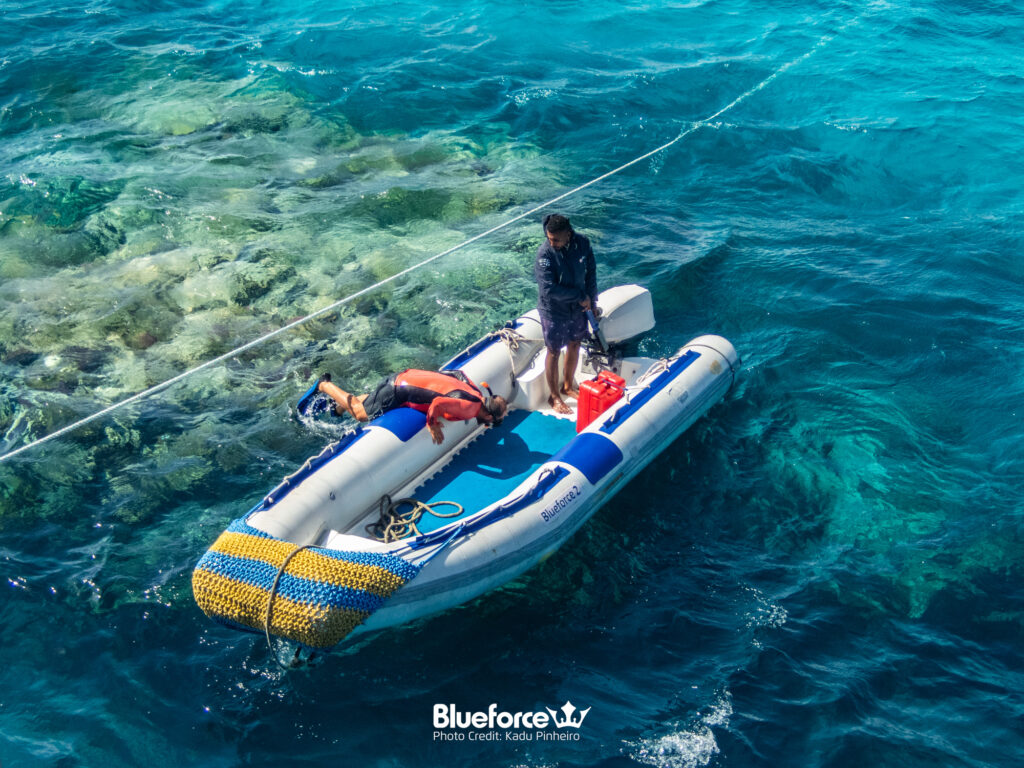
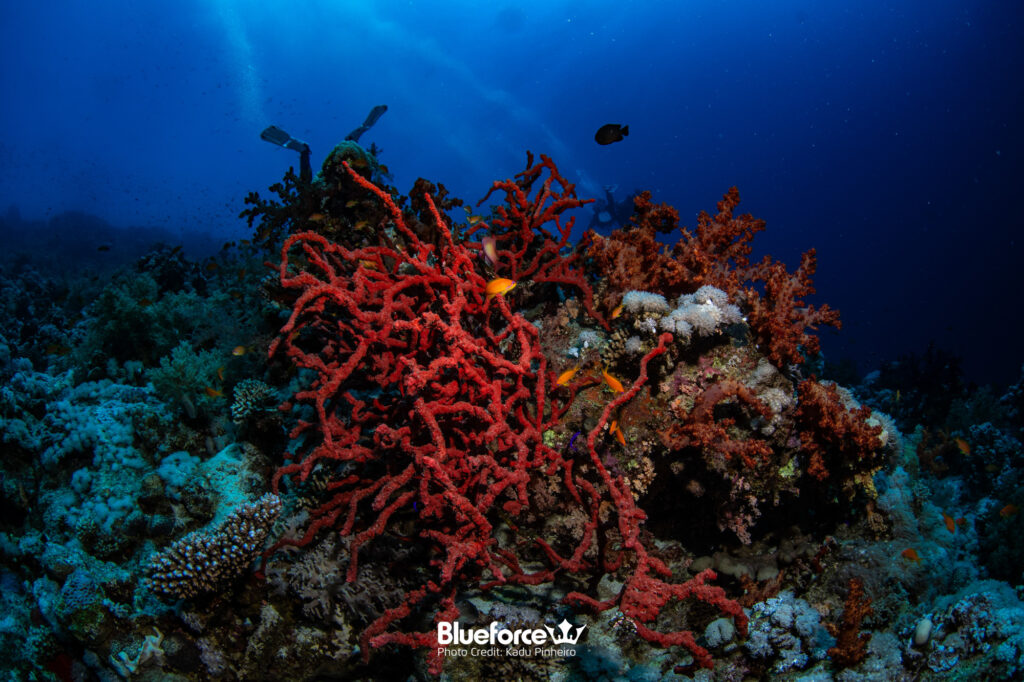
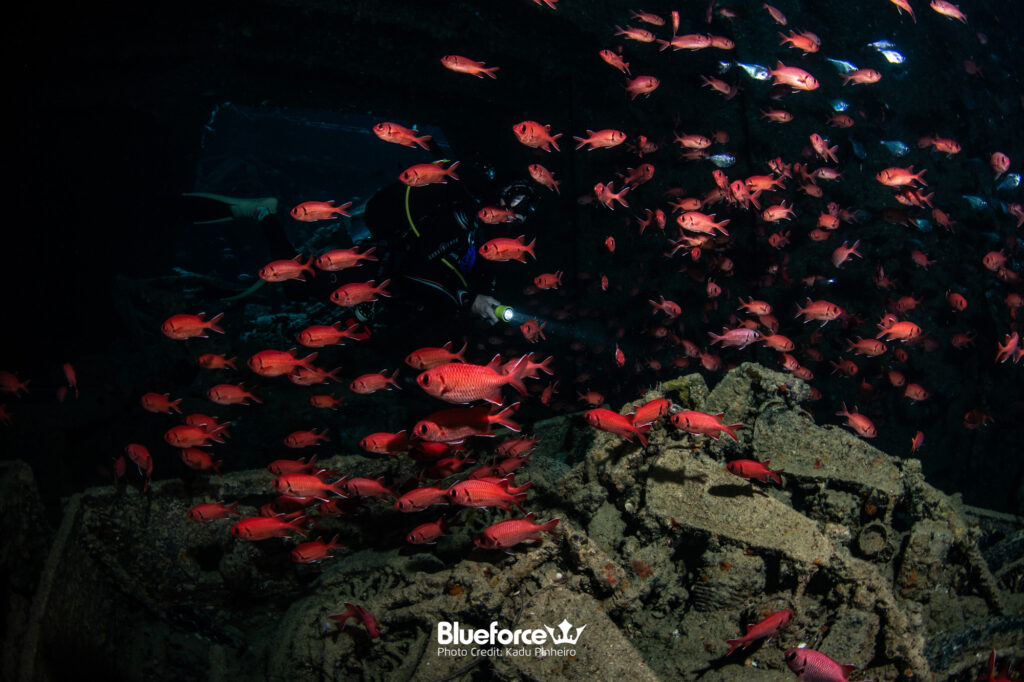
This geological history helps explain the underwater landscape itself: walls, drop-offs, plateaus, islands, and formations that are now part of the diving experience. It’s why the northern route, sailed by the Blue Force 2, packs so many different scenes into just a few days at sea — from vertical walls to shallow plateaus, all shaped by that same geological force still in motion. It’s one of those cases where geology stops being an abstract subject — you’re literally diving inside it.
The desert and the sea
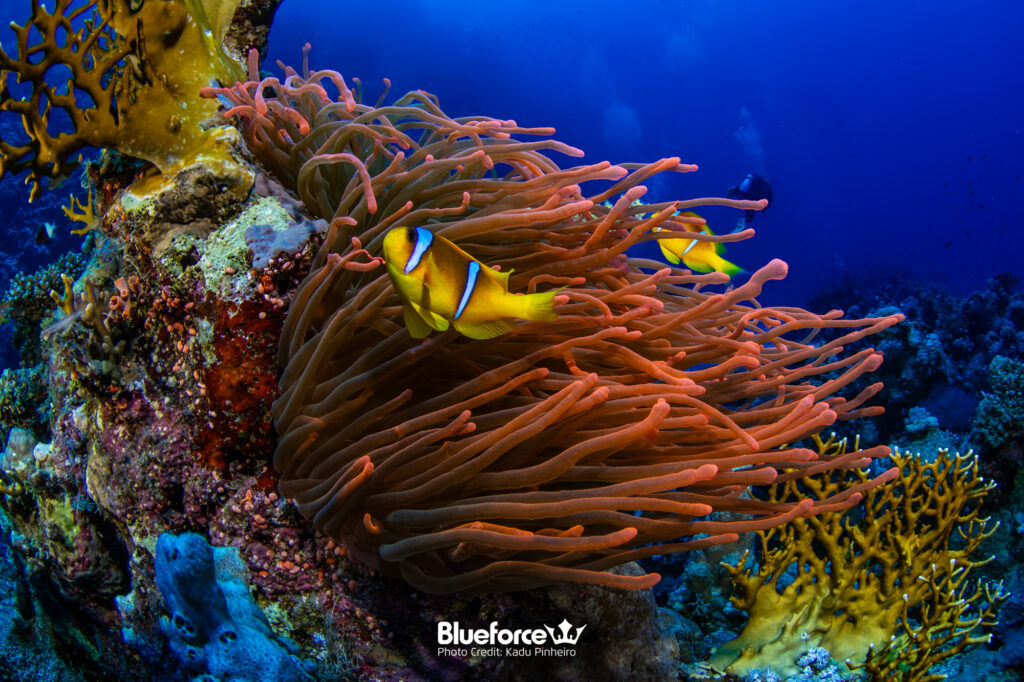
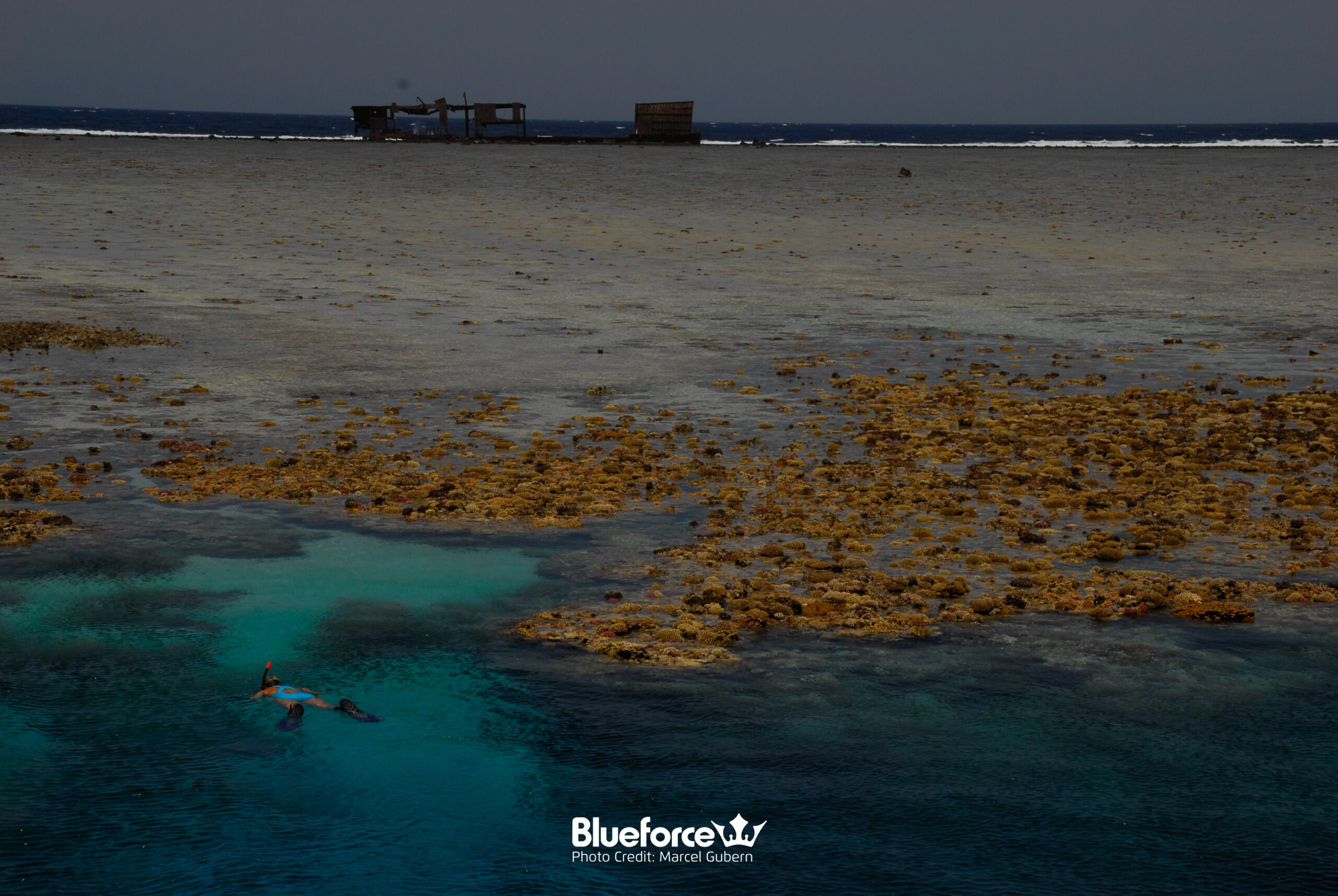
One of the Red Sea’s most striking features is contrast. On the surface: desert, almost no rain, arid landscapes, mountains and rock. Below: coral, fish, invertebrates, color, movement, life.
That combination isn’t just visually beautiful — it helped create very particular environmental conditions. The Red Sea receives very little freshwater from major rivers, and its relatively narrow connection to the Indian Ocean contributes to its distinctive physical and chemical properties. It’s an environment that, at first glance, looks extremely hostile. And yet it sustains one of the most fascinating marine ecosystems on the planet.
That’s why diving here feels different
When you get in the water aboard the Blue Force 2, on a trip along the northern route, it’s easy to see only the result: a colorful reef, a wall, a school of fish, the wreck of the Thistlegorm, incredibly clear water. But there’s a much bigger story behind that scenery.
You’re looking at the result of geology, climate, isolation, evolution, and human history, all combined. And maybe that’s one of the most interesting things about the Red Sea: the more you learn about it, the less diving here is just visual. You start to understand why the place is the way it is.
And maybe that’s the real meaning of “Red Sea”
Once you know a bit of this history, the question “why is it called the Red Sea?” loses some of its weight — because there isn’t necessarily a single answer. It could be a historical reference. It could be tied to ancient peoples and languages. It could relate to a natural phenomenon. It could be a combination of all of it.
The name survived for thousands of years. The meaning changed. Civilizations changed. Routes changed. Ships changed. And now we arrive at the Red Sea to do something completely different: dive. But the sea we find still carries all of these histories.
The Red Sea seen from below
Maybe that’s the best way to start understanding this destination: not just looking at the dive sites, but at the place that exists behind them. The Thistlegorm isn’t simply a pin on a map. The reefs aren’t there by chance. The walls, islands, and underwater formations aren’t just scenery — all of it is part of a much bigger story.
The next time you’re in the water in the Red Sea, something curious might happen: you’ll look at that deep blue and remember — this was once called red.
And suddenly, the dive begins before you’ve even entered the water.
This is the experience we aim to offer aboard the Blue Force 2: not just a week of diving along the classic northern route, but an immersion into a sea that carries thousands of years of history, geography, and mystery before you’ve even put your fins on. If this story sparked your curiosity, the next step is a natural one — come discover the Red Sea with us, from inside the water.
The story behind one of the ocean’s most curious names
The first time you enter the water in the Red Sea — aboard the Blue Force 2, sailing the classic northern route — a few things grab your attention right away: the visibility, the deep blue, the reefs, the sheer amount of life. But there’s a question that probably doesn’t cross your mind: why is this sea called the Red Sea?
Because underwater, the answer seems obvious: it isn’t red. Most of the time, what you see is exactly the opposite — an enormous stretch of blue, often so clear that the bottom looks much closer than it really is.
So where did the name come from? The answer is far more interesting than it seems.
A name thousands of years old
The name we use today wasn’t born in English. The ancient Greeks already called this region Erythra Thalassa — literally “Red Sea” — and the Romans, later on, used the Latin form Mare Rubrum. But the origin of the name is far more complex than a simple reference to the color of the water.
There’s no single, definitively proven explanation for the “red.” Over the centuries, different theories have been proposed.
One links the name to seasonal blooms of a marine microorganism, Trichodesmium erythraeum, which can give the water’s surface a reddish tint under certain conditions. Another connects it to the reddish mountains and landscapes found along parts of the coastline.
There’s also a linguistic and geographic reading: in some ancient traditions, colors were used to indicate directions, and “red” may have represented the south — the same way “black” was linked to the north in other historical seas. This theory is still debated today.
And there’s an explanation tied to Edom, a word associated with the meaning “red” and with the people who inhabited parts of the region south of Israel. Classical sources also record a tradition that the name may trace back to a king called Erythras.
In other words: maybe there was never a single “red” behind the name. It may be the result of a combination of geography, language, history, and human perception — and that fits the Red Sea perfectly.
Before it was a diving destination
Today we think of the Red Sea through cylinders, masks, dive boats, and reefs. But long before any of that, it was already a route.
Ancient civilizations sailed its waters, using its ports and coastlines as part of trade networks connecting Egypt, the Arabian Peninsula, the Horn of Africa, and, later, regions much farther away. The Greek name for this region, in fact, was once used far more broadly — sometimes designating not just today’s Red Sea, but a much larger stretch of the Indian Ocean and its gulfs.
During the Roman period, the Red Sea became a key commercial link to the East. Shipping routes connected Egypt to Indian Ocean trade, creating a maritime corridor that crossed cultures, empires, and centuries.
When the Blue Force 2 sails the Red Sea today, it’s following, in a way, a route that navigators have traveled for thousands of years. Except now you’re looking for something else on board. Not spices, not gold, not silk — you’re looking for what lies beneath the surface.
A geographic reason behind it all
The Red Sea is an extraordinary geological formation. It sits along a tectonic plate boundary — part of a rift system that continues to reshape the region to this day. In other words: the Red Sea is still, geologically speaking, a work in progress.This geological history helps explain the underwater landscape itself: walls, drop-offs, plateaus, islands, and formations that are now part of the diving experience. It’s why the northern route, sailed by the Blue Force 2, packs so many different scenes into just a few days at sea — from vertical walls to shallow plateaus, all shaped by that same geological force still in motion. It’s one of those cases where geology stops being an abstract subject — you’re literally diving inside it.
The desert and the sea
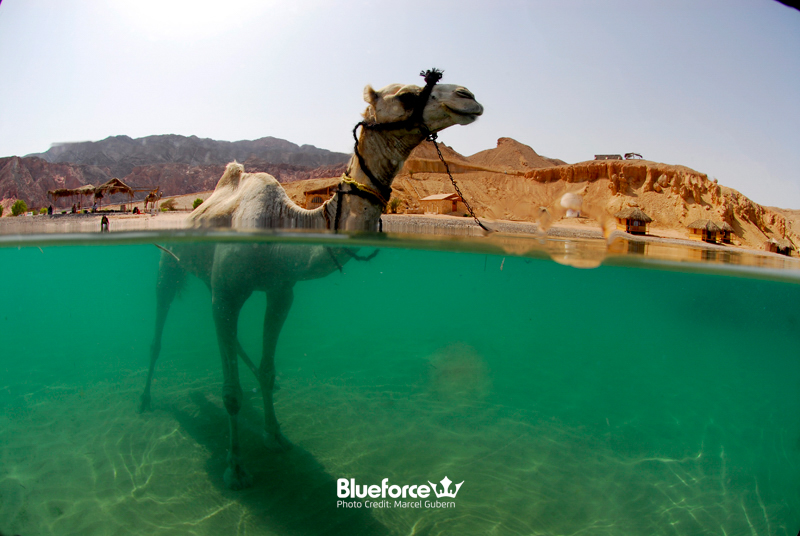
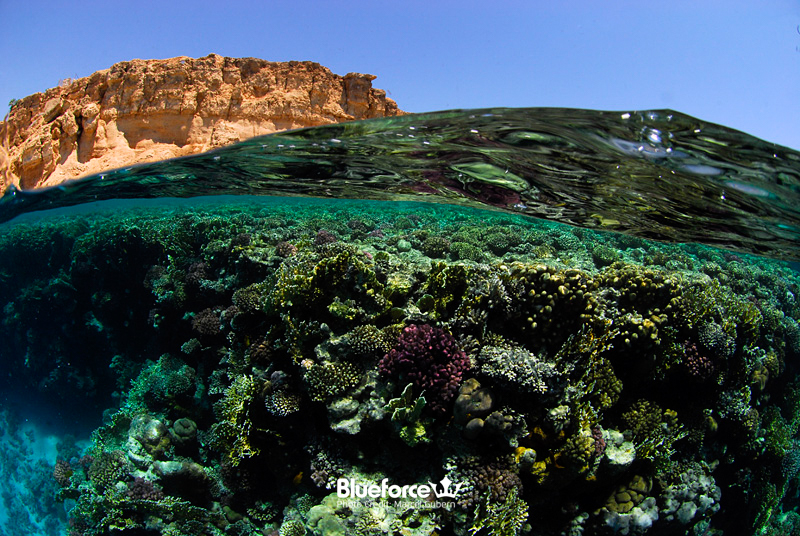
One of the Red Sea’s most striking features is contrast. On the surface: desert, almost no rain, arid landscapes, mountains and rock. Below: coral, fish, invertebrates, color, movement, life.
That combination isn’t just visually beautiful — it helped create very particular environmental conditions. The Red Sea receives very little freshwater from major rivers, and its relatively narrow connection to the Indian Ocean contributes to its distinctive physical and chemical properties. It’s an environment that, at first glance, looks extremely hostile. And yet it sustains one of the most fascinating marine ecosystems on the planet.
That’s why diving here feels different
When you get in the water aboard the Blue Force 2, on a trip along the northern route, it’s easy to see only the result: a colorful reef, a wall, a school of fish, the wreck of the Thistlegorm, incredibly clear water. But there’s a much bigger story behind that scenery.
You’re looking at the result of geology, climate, isolation, evolution, and human history, all combined. And maybe that’s one of the most interesting things about the Red Sea: the more you learn about it, the less diving here is just visual. You start to understand why the place is the way it is.
And maybe that’s the real meaning of “Red Sea”
Once you know a bit of this history, the question “why is it called the Red Sea?” loses some of its weight — because there isn’t necessarily a single answer. It could be a historical reference. It could be tied to ancient peoples and languages. It could relate to a natural phenomenon. It could be a combination of all of it.
The name survived for thousands of years. The meaning changed. Civilizations changed. Routes changed. Ships changed. And now we arrive at the Red Sea to do something completely different: dive. But the sea we find still carries all of these histories.
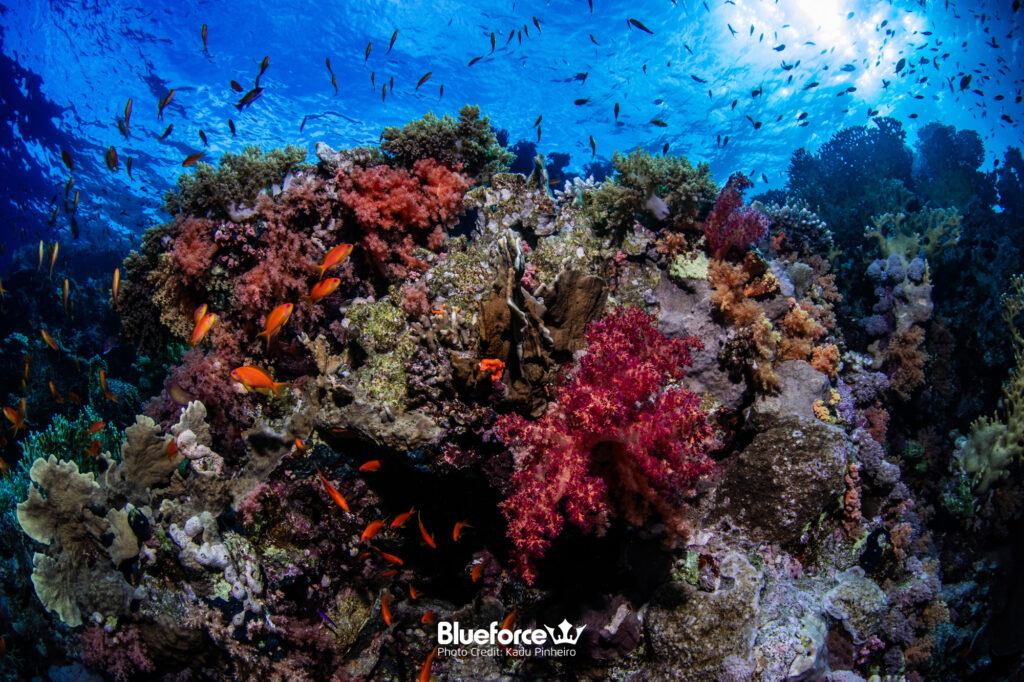
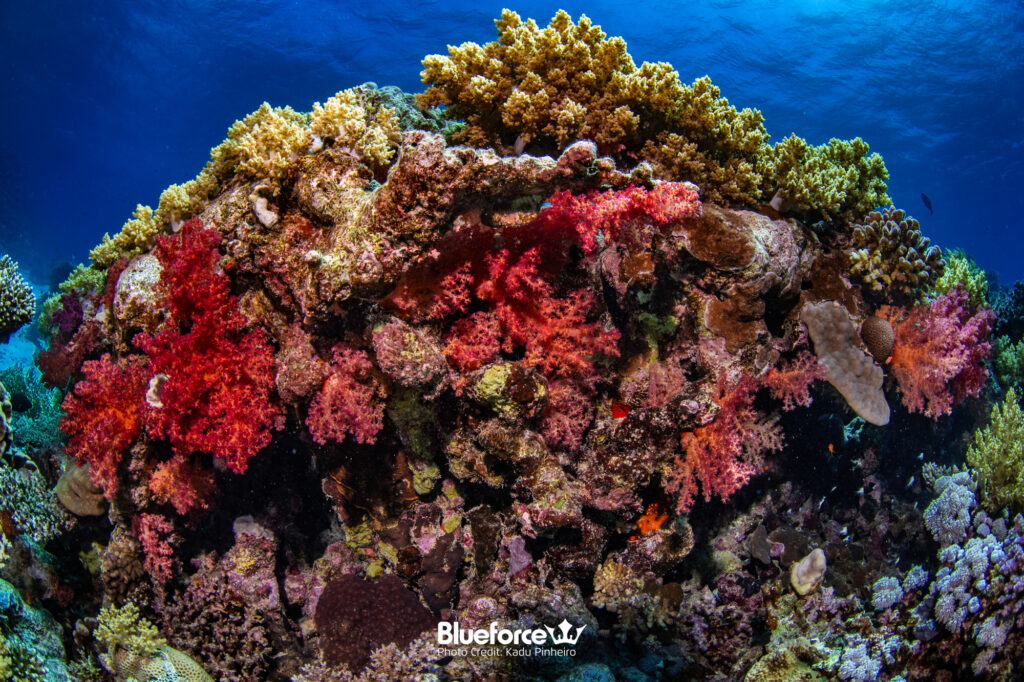
The Red Sea seen from below
Maybe that’s the best way to start understanding this destination: not just looking at the dive sites, but at the place that exists behind them. The Thistlegorm isn’t simply a pin on a map. The reefs aren’t there by chance. The walls, islands, and underwater formations aren’t just scenery — all of it is part of a much bigger story.
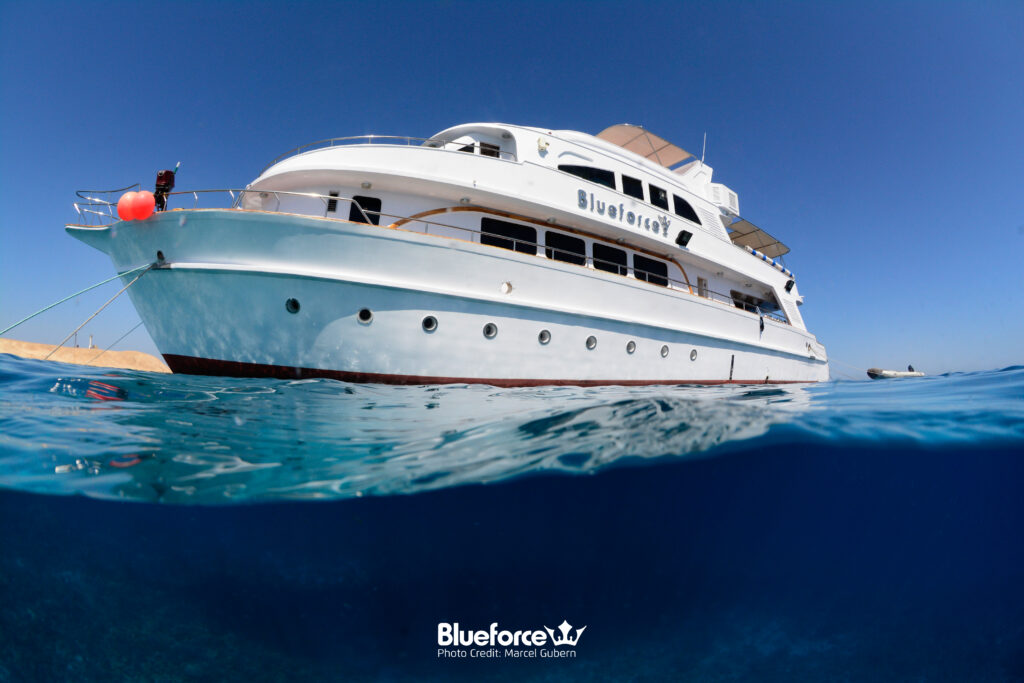
The next time you’re in the water in the Red Sea, something curious might happen: you’ll look at that deep blue and remember — this was once called red.
And suddenly, the dive begins before you’ve even entered the water.
This is the experience we aim to offer aboard the Blue Force 2: not just a week of diving along the classic northern route, but an immersion into a sea that carries thousands of years of history, geography, and mystery before you’ve even put your fins on. If this story sparked your curiosity, the next step is a natural one — come discover the Red Sea with us, from inside the water.


You May Also Like
Why Is the Red Sea the Best Place in the World to Improve Your Buoyancy?
Behind the Blue Force Experience: the team who make everything flow smoothly