What No One Tells You About Entering a Wreck for the First Time
Some dives impress with the sheer amount of fish. Others stay with you for their visibility, their current, or an unexpected encounter with a big pelagic. But few stir up as many emotions at once as the first time a diver crosses into a shipwreck.
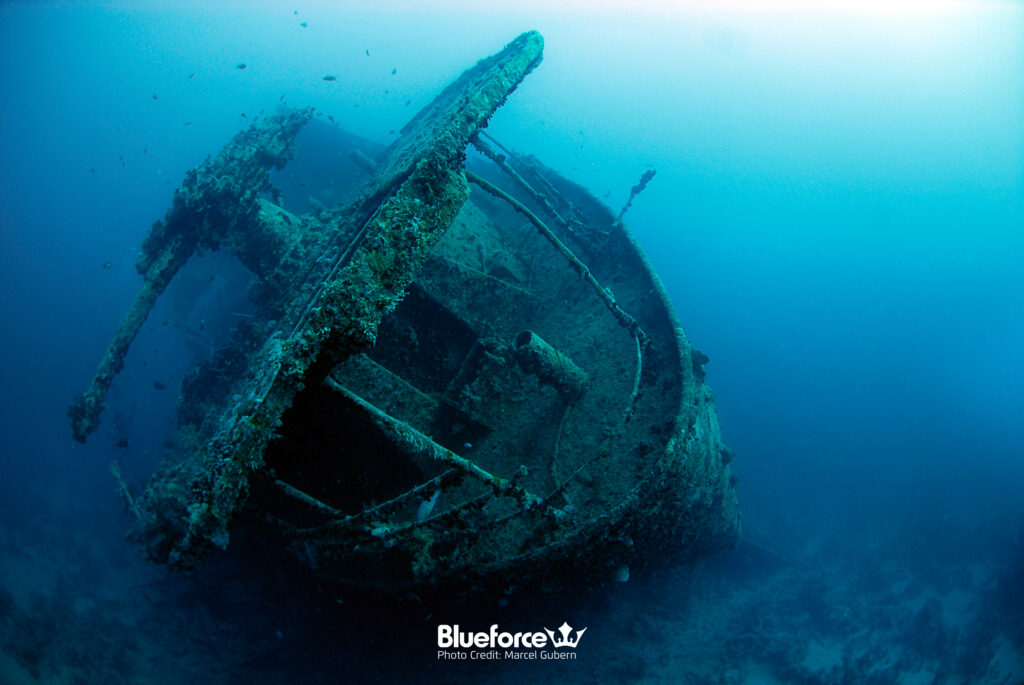
Even before entering, something shifts.
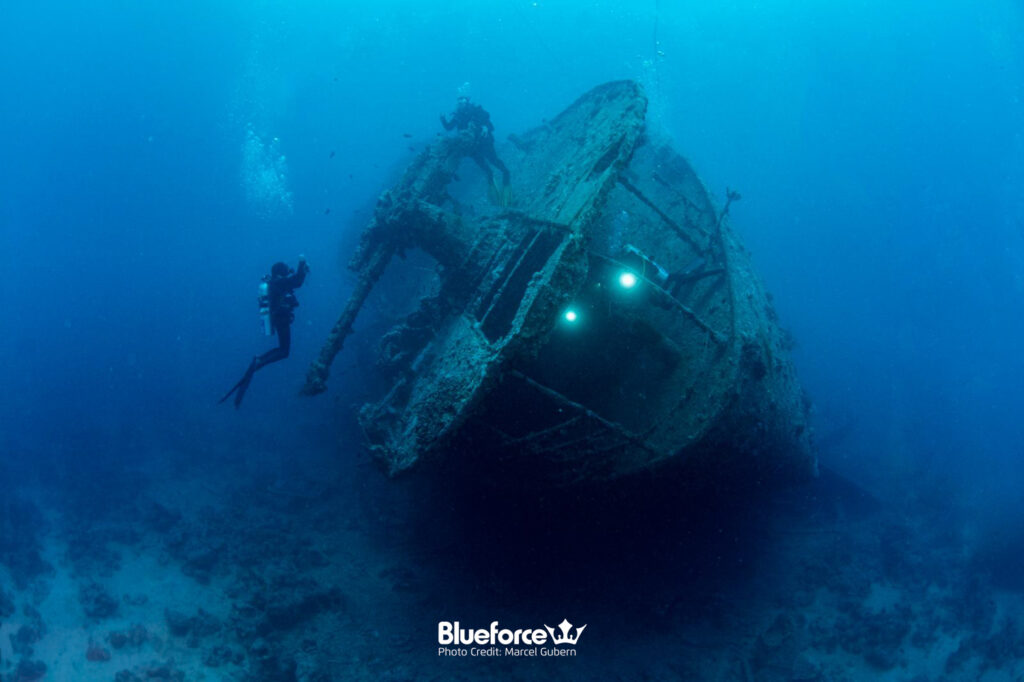
From a distance, the ship no longer looks like just a steel structure resting on the seabed. There’s a presence that’s hard to explain. It’s impossible to look at that hull without imagining the stories it carries. For years it sailed across seas, weathered storms, carried people, cargo, and dreams. Today it lies still and silent, slowly reshaped by the ocean.
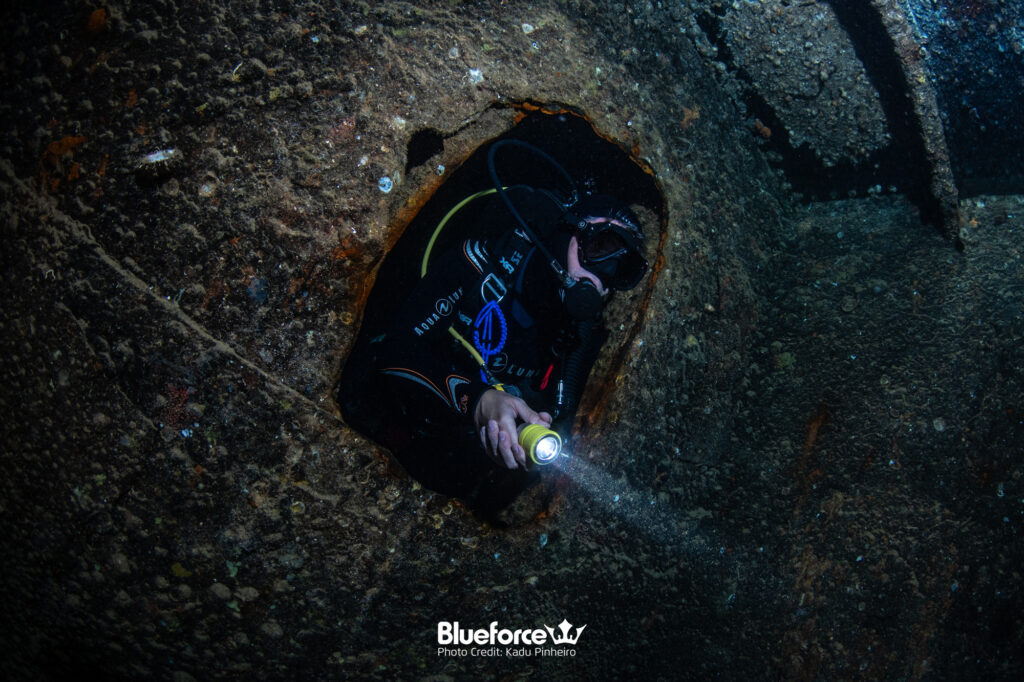
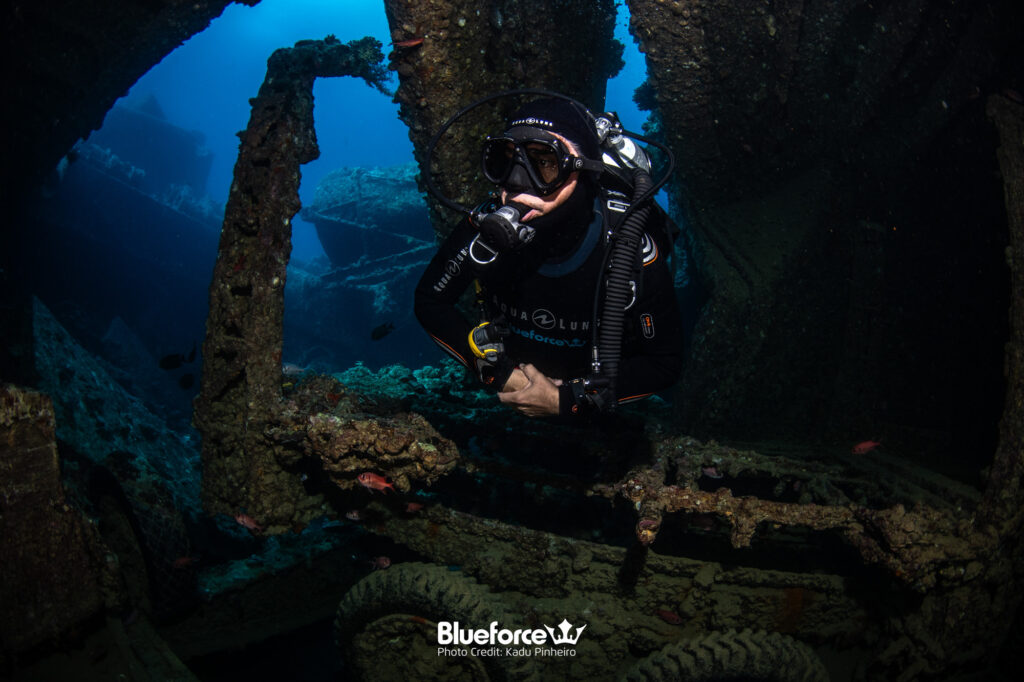
You approach slowly. The opening is right ahead. Your guide signals to move in. You know the dive was carefully planned, that the route is safe, and that an experienced team is running the whole operation. And yet, for a few seconds, your brain hesitates.
It’s an instinct hard to override. We spend our whole lives learning not to enter dark, enclosed, unfamiliar spaces, and suddenly you’re about to do exactly that, twenty or thirty meters below the surface.
Then you cross the entrance. Within a few meters, the world changes completely.
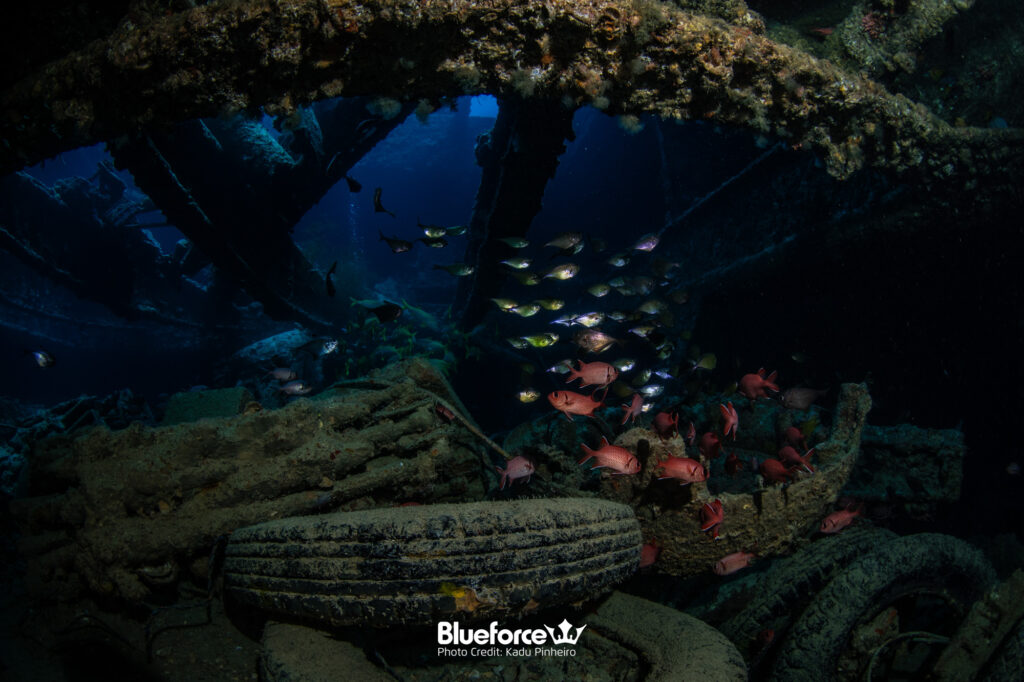
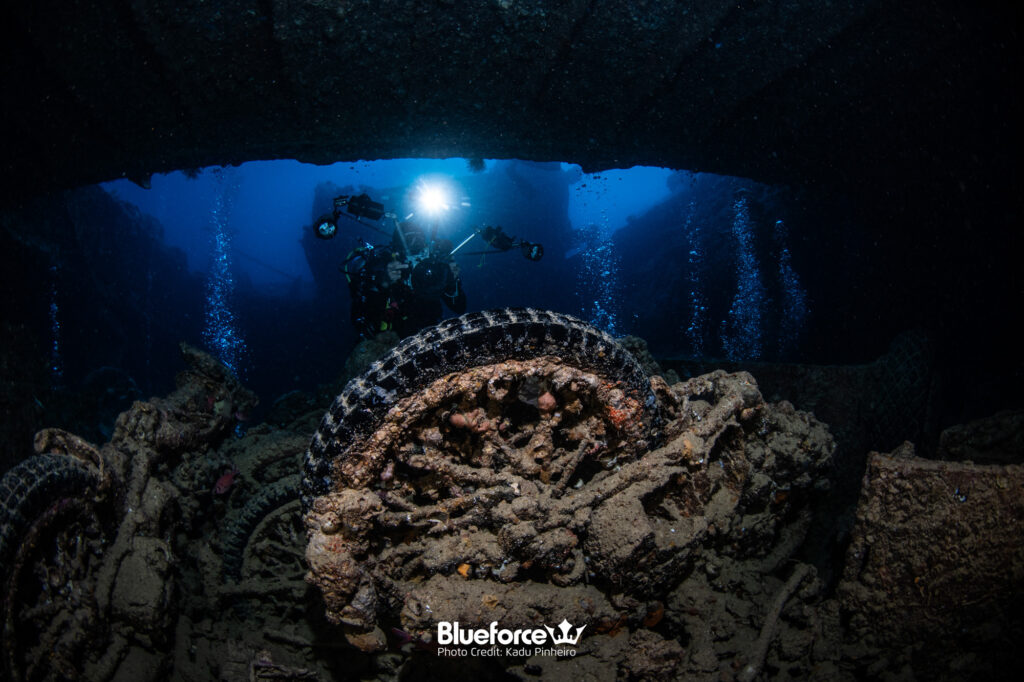
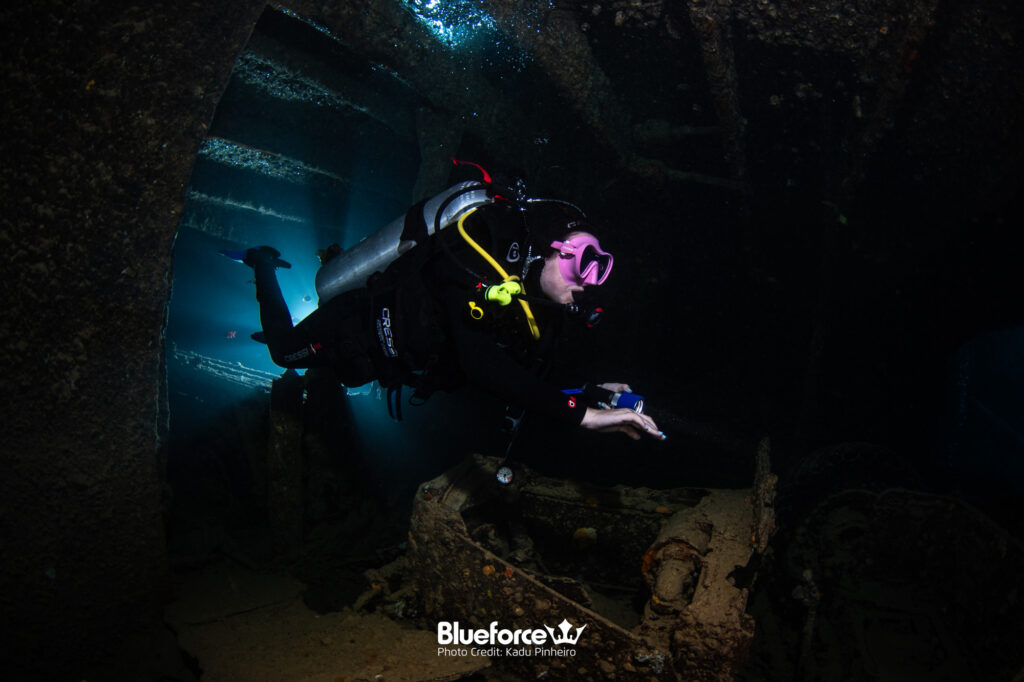
The deep blue falls away. Light now filters in only through windows, hatches, and tears in the hull, drawing beams that cut through suspended particles, as if they were floating in time itself. The sound of your own breathing takes on a new intensity, every bubble rising toward the metal ceiling seems to echo through the whole space.
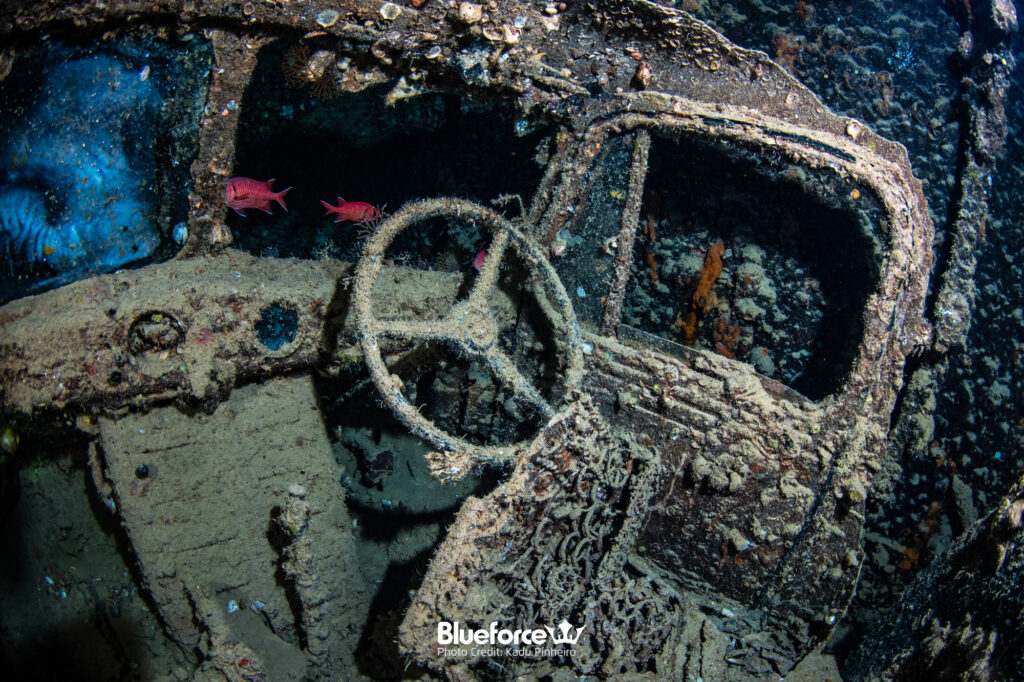
Inside, everything invites silence. Your pace slows without you noticing. Your eyes move across corridors, staircases, engines, cables, and compartments that remain almost exactly where they were on the day of that vessel’s last voyage. It’s impossible not to wonder who was there, who walked those corridors, who held that piece of equipment, who looked out that window for the last time.
Wrecks spark a curiosity all their own, because they don’t just tell the ocean’s story. They tell the story of people. And maybe that’s exactly what makes the experience so unforgettable.
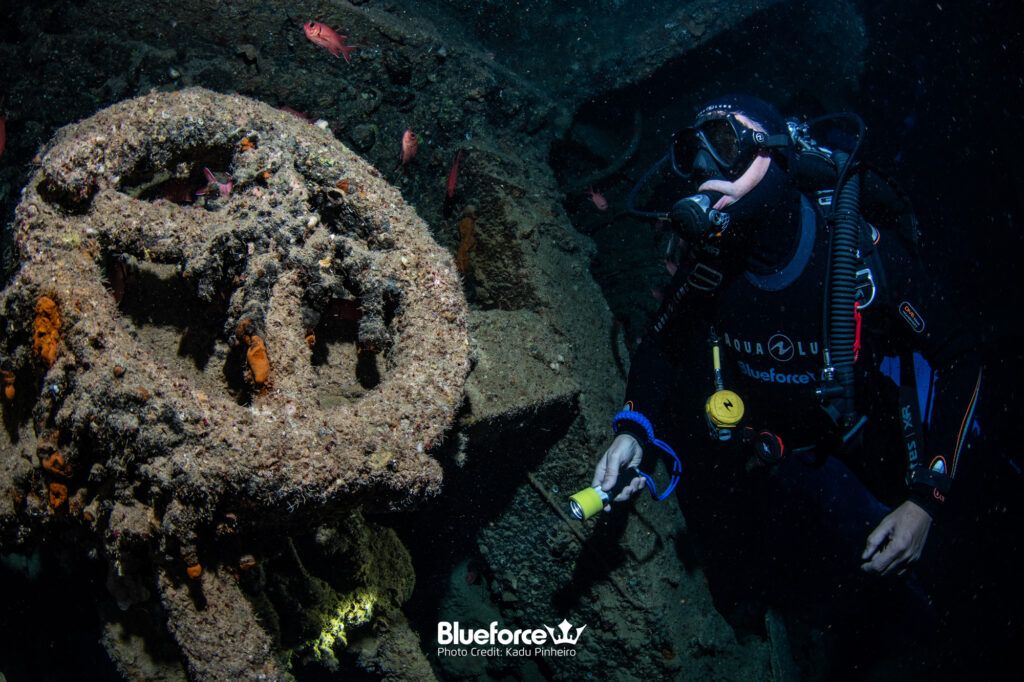
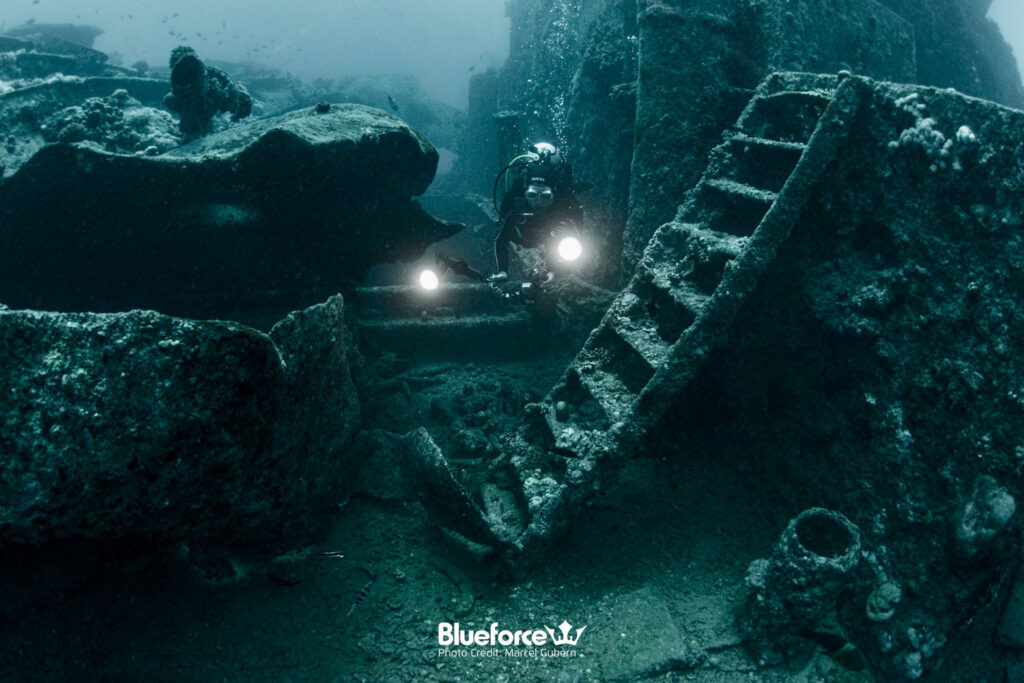
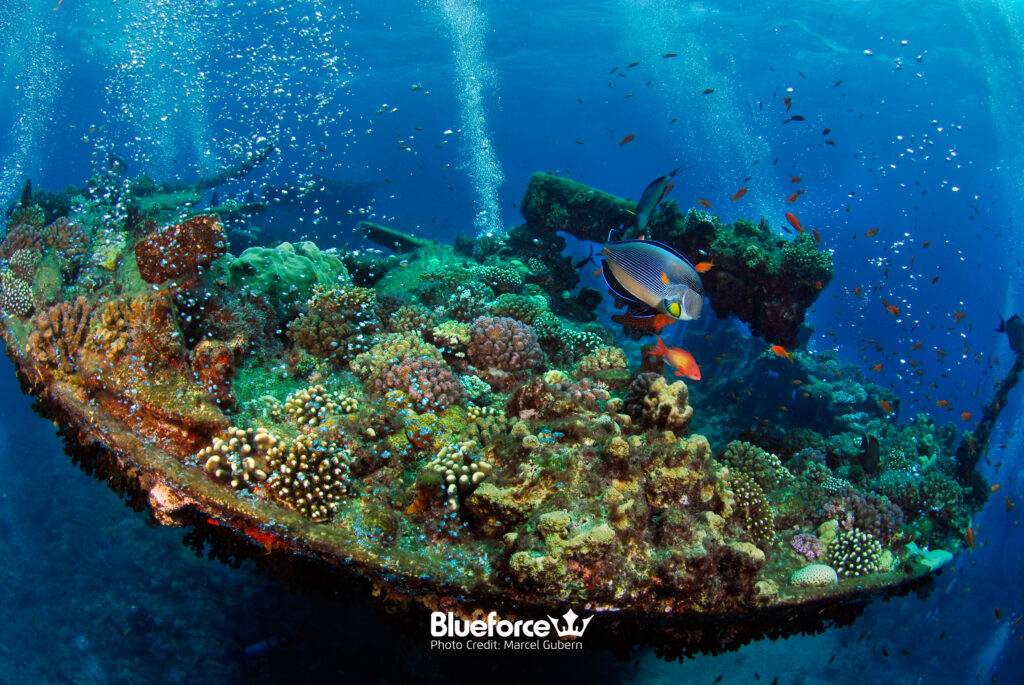
While reefs are alive and constantly changing, a wreck exists between two worlds. Even as it preserves a piece of human history, it becomes part of the marine ecosystem: corals grow over old steel plating, schools of fish fill rooms that were once workspaces, fish turn hatches into shelter. The ocean didn’t destroy that ship. It gave it a new life.
When it’s finally time to leave, the feeling is almost unexpected. You cross back through the opening, and the blue rushes back in around you. The light feels brighter. The space feels endlessly bigger. It’s like stepping out of a museum where no one speaks, but where every detail tells a story.
Maybe that’s why so many divers say their first wreck is never forgotten. Not because of the beauty of the structure, not because of how much marine life surrounds it, and certainly not because of the perfect photograph. What stays with you is the atmosphere, that mix of respect, curiosity, and discovery that only exists when you realize you’re standing in a place where time simply stopped.
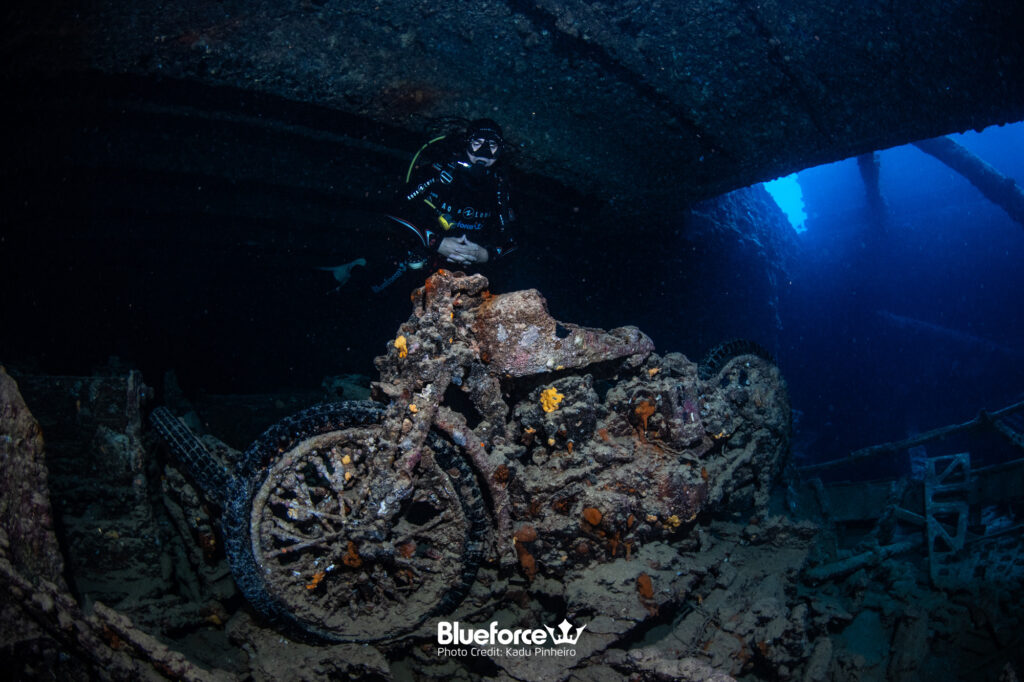
It’s exactly that feeling that makes the northern Red Sea one of the most sought-after destinations in the world for divers who dream of exploring historic wrecks. Icons like the SS Thistlegorm, the Dunraven, and the Kingston aren’t just famous dive sites. Each one has its own personality, its own story, and an atmosphere impossible to recreate anywhere else on the planet.
And maybe the best way to discover that is aboard the Blue Force 2.
Over a week sailing the Red Sea, you don’t just visit a wreck, you dive into a collection of stories. Without the rush of daily shore excursions, there’s time to get to know each vessel, understand its history, notice the details that would normally go unseen, and surface each time feeling like the dive added another chapter to the trip.
Aboard the Blue Force 2, the goal was never just to take divers to the world’s most famous wrecks. It’s to offer the complete experience of exploring them in comfort, safety, and calm, letting every descent unfold at the right pace. Because a wreck isn’t just a destination on a map. It’s a journey through time.
And some journeys happen long before we return to the surface.

You May Also Like
WHEN AN ENCOUNTER BECOMES SCIENCE
THE NORTHERN MALDIVES